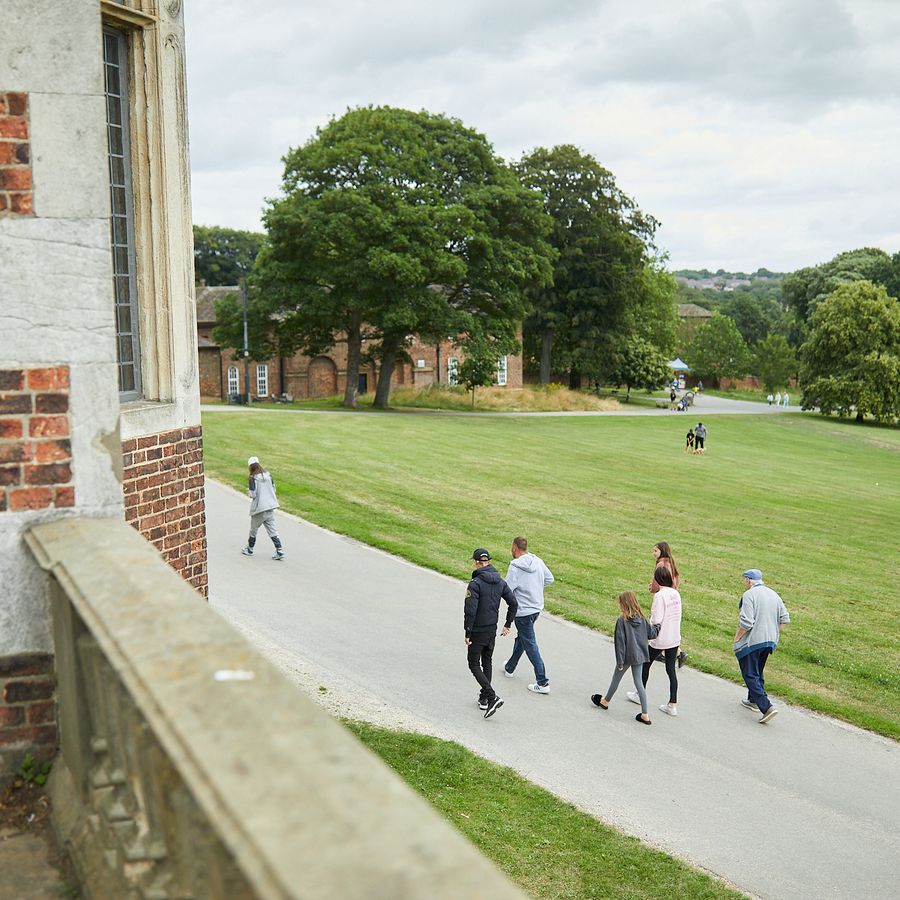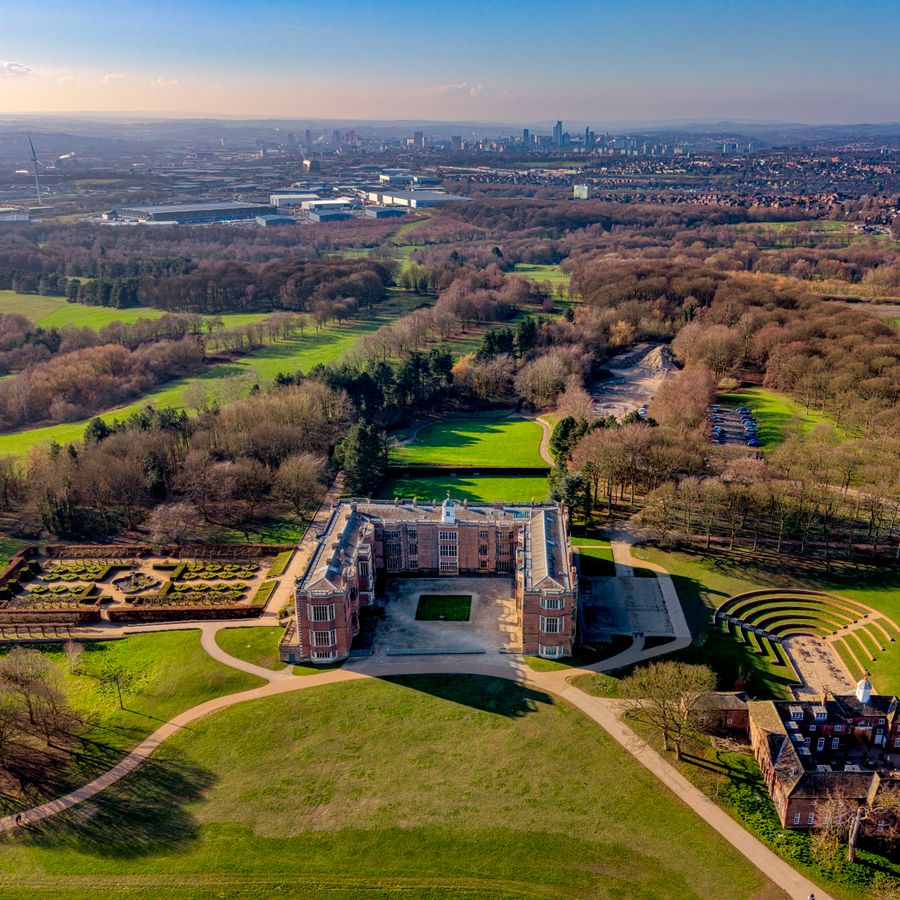
An airel image of Temple Newsam House, a large heritage house with garden and hedgeway views across Leeds

Temple Newsam House

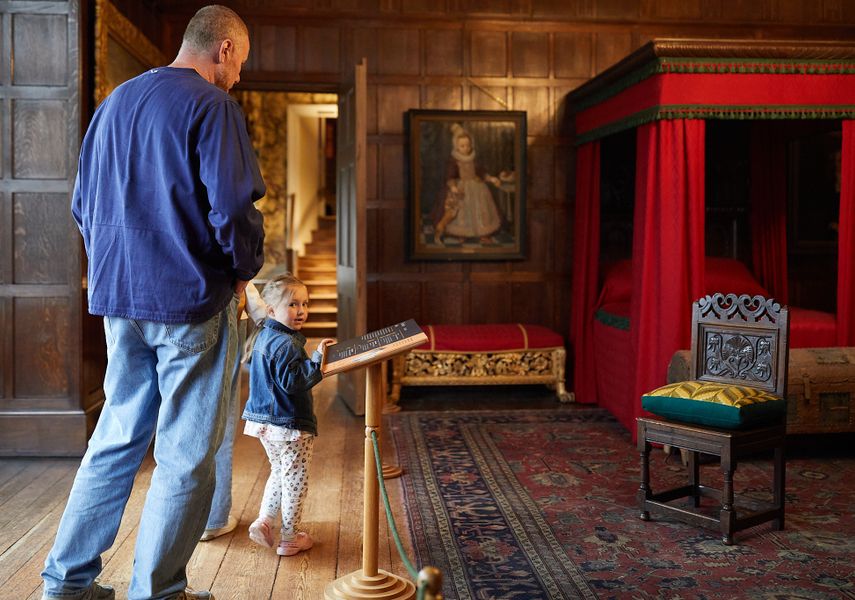
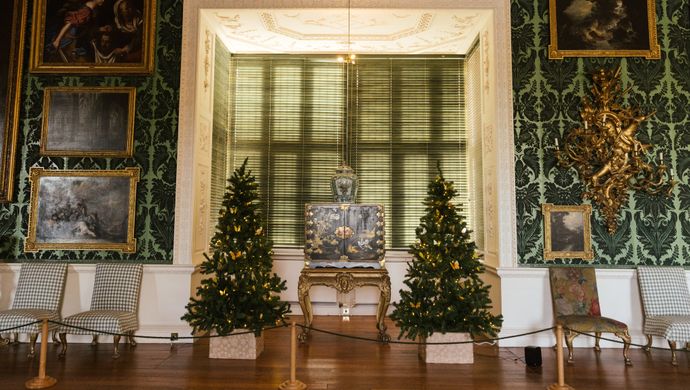
Temple Newsam is one of the great houses of England, bursting with treasures and tales. With over 500 years of history, it has been home to many colourful characters. Explore this atmospheric house, immerse yourself in tales gone by and marvel at the beautifully crafted interiors.


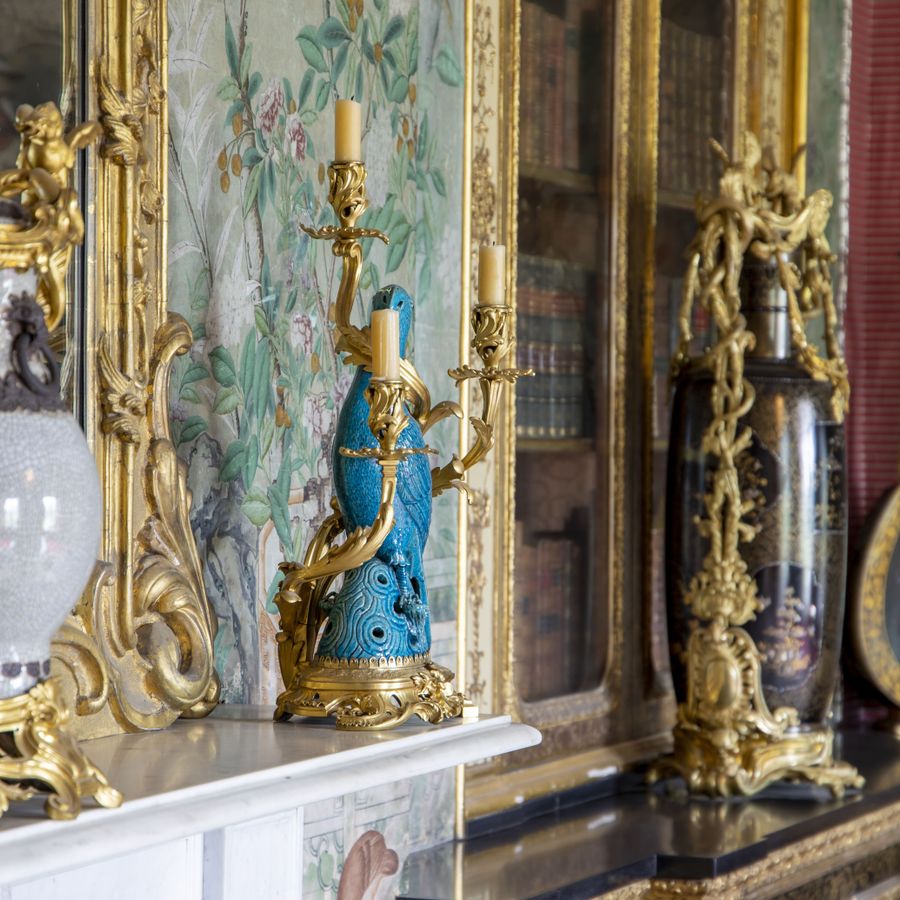
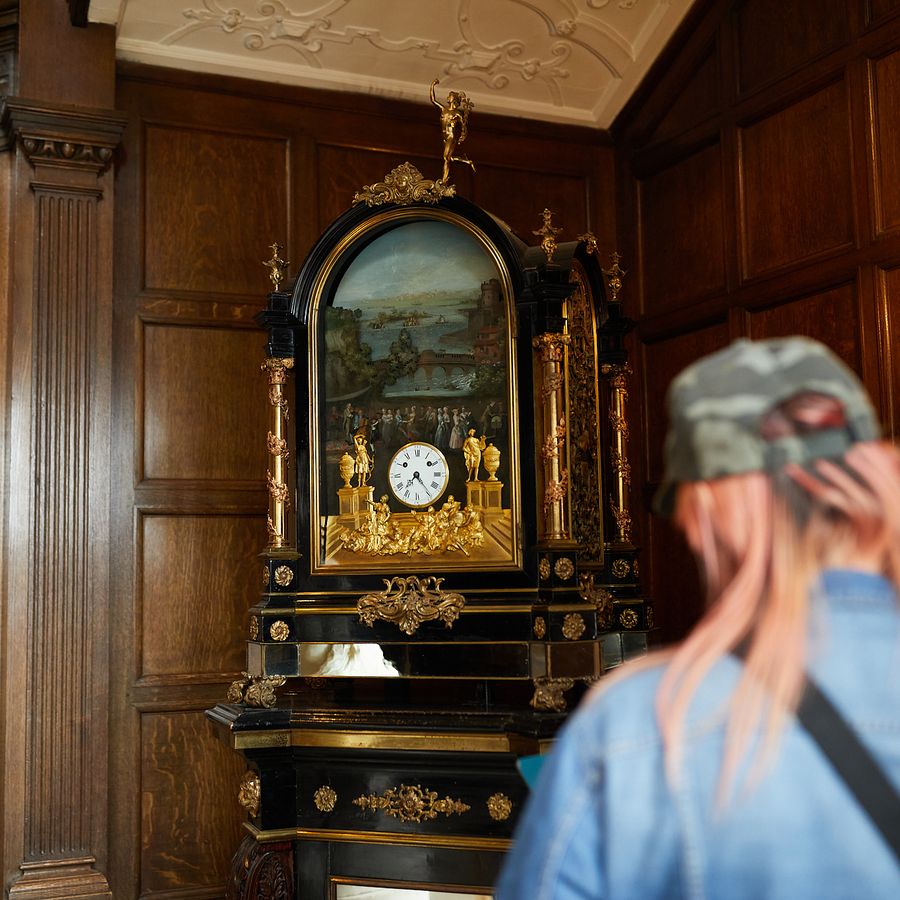
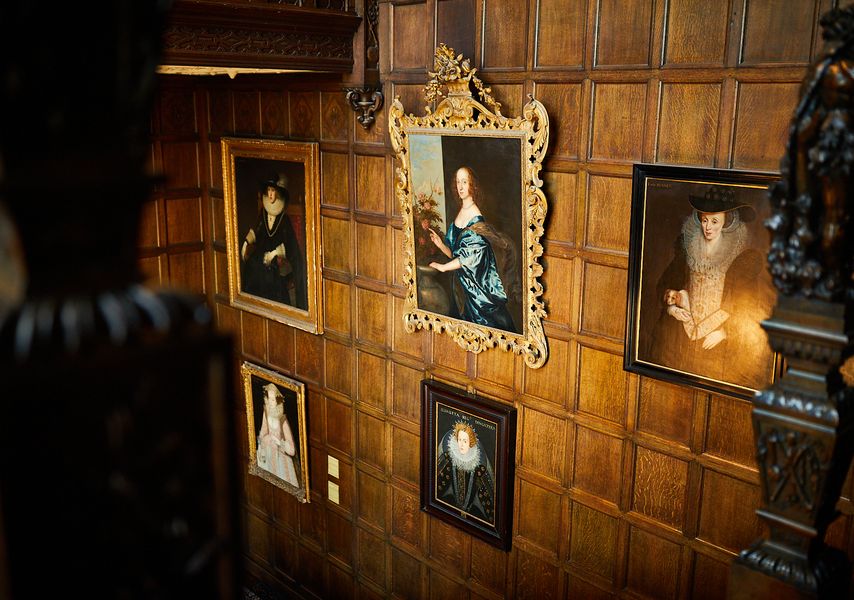
Discover over 40 rooms of treasures, with furniture, silver, ceramics, fine art, textiles and wallpaper created by many of history’s greatest artists, designers and craftsmen including Thomas Chippendale, Paul de Lamerie, the Leeds Pottery, George Stubbs, Joshua Reynolds and William Morris. Uncover the stories of the people who lived here, including the notorious Lord Darnley and how generations of one family developed the house over 300 years.

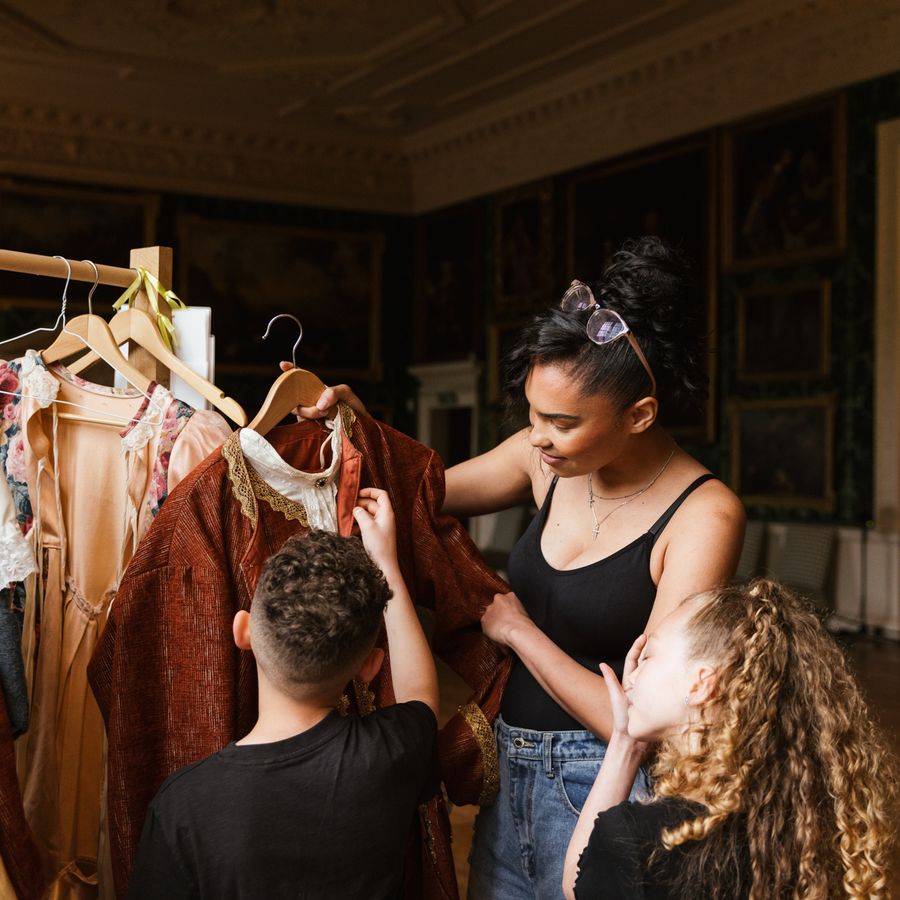
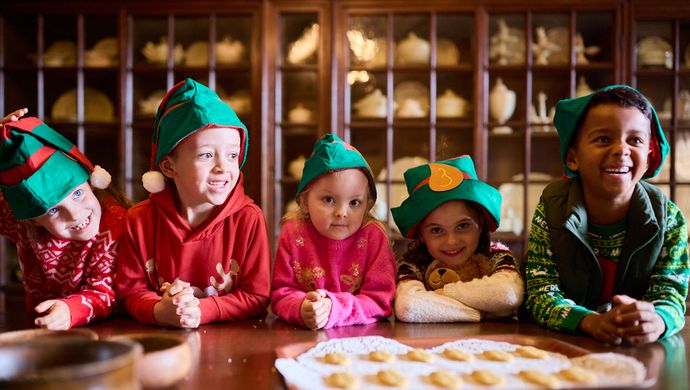
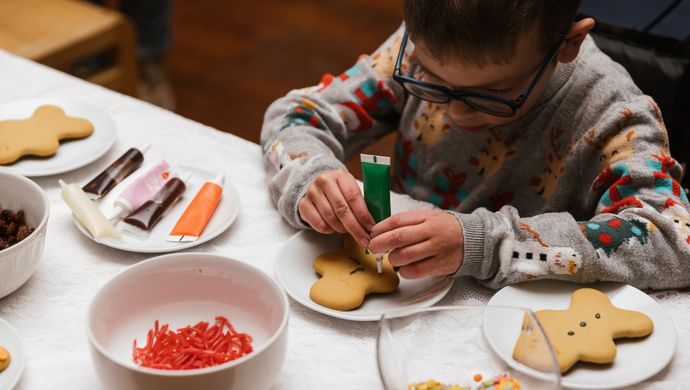
Families can enjoy interactive play bays and a self-led tour with the servant Faith Hardwick. Read the Temple Newsam Family Guide.

Find out what's on at Temple Newsam House

Temple Newsam's Collections

The collection has been built up by curators since 1923 when the estate was bought from the Edward Wood (Lord Irwin, later the Earl of Halifax) by the City of Leeds and developed as a country house museum. Although bought as a largely empty shell, the house now boasts one of the greatest fine and decorative art collections in the country. The collection has the distinction of being the first country house collection to have been Designated of international significance. The furniture collection is particularly renowned, widely considered the best in the UK, other than the Victoria & Albert Museum. 

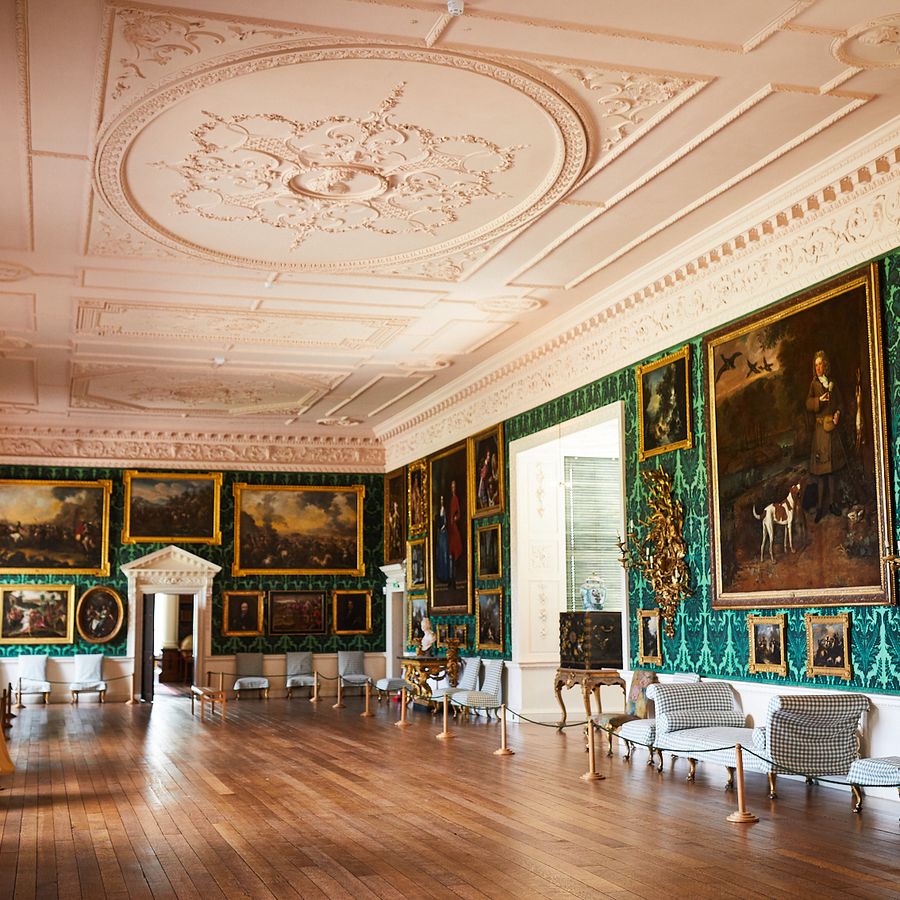
Whilst much of Temple Newsam’s collection today has come from far and wide, many objects are original to the house, having returned over the last 80 years. This includes a large number family portraits of the Ingram family, who owned the house for 300 years, as well as furnishings and other pictures. The 1746 suite of gilded furniture made for the Picture Gallery is particularly spectacular, carved in elaborate Rococo style and featuring original floral needlework.

The Chippendale Society Collection

Joining the many treasures owned by Leeds Museums & Galleries, Temple Newsam is also the permanent home of the Chippendale Society’s collection. This contains important furniture, drawings and archives by Britain’s most celebrated furniture maker and designer, Thomas Chippedale Snr. This collection accompanies masterpieces by Chippendale owned by Leeds Museums and Galleries, such as the Harewood Library Writing Table, bought in 1965 for a then-world record auction price.

The Origins of Temple Newsam

The manor of Newsam (‘new houses’) was first recorded in the Domesday Book in 1086. In 1155 it  became a property of the Knights Templar, the military-religious order who guarded the pilgrim routes to Jerusalem. They created a successful farmstead, with over 1000 sheep. After the Knights Templar order was dissolved by Pope Clement V in 1312, the estate moved ownership several times before eventually passing to the Darcy family.

Thomas Lord Darcy built a new house on the estate in the early 1500s, conforming to the Tudor style. The spectacular house, of which only the west wing substantially survives as the central block of the building, formed the foundations for the country house we know today. Darcy did not live to see his estate flourish, being executed in 1537 for his part in the Catholic revolt known as the Pilgrimage of Grace. Henry VIII claimed the estate and gifted it to his favourite niece, the Countess of Lennox, and it was here that her sons Henry Stuart, Lord Darnley, and Lord Charles Stuart were born and brought up.

Now effectively a minor royal palace, in the mid-1500s Temple Newsam was a site of political intrigue, which came to a head with Darnley’s marriage to Mary Queen of Scots and subsequent murder. After Mary Queen of Scots was imprisoned, Queen Elizabeth I seized the estate and it became the property of the Crown. Darnley’s short and controversial marriage to Mary was highly consequential. The circumstances surrounding Darnley’s murder eventually resulted in Mary’s downfall, but the relationship also the birth of her only son and heir, James. James soon became King James VI of Scotland, then later James I of England, the first time the two crowns were united and ushering in the Stuart dynasty in England.

Temple Newsam became neglected for nearly 80 years before being bought by the ruthless Yorkshire-born entrepreneur Sir Arthur Ingram. He remodelled the house, providing the basic form you see today. He tied together the slightly disparate wings in 1628 with the country’s longest external inscription, set in stone in the balustrade along the roofline. In 1642, ‘china drinke’, or tea, as we know it, was supplied to the house, evidenced by an apothecary bill. This is the earliest known mention of tea in Britain.

Sir Arthur’s immediate descendants, who went on to inherit the house, were wildly extravagant in their spending, eventually leading to the sale of many furnishings. This was in spite of Sir Arthur Ingram’s grandson, Henry, being bestowed a Scottish Peerage by Charles II in 1661, becoming Viscount Irwin. Temple Newsam’s fortunes were revived when Arthur, 3rd Viscount Irwin, married Isabella Machel. She brought with her two parliamentary seats, courtesy of her father. Isabella gave birth to nine sons, five of which became successive viscounts, but she outlived them all and nearly outlived her only grandson, Charles, the 9th (and last) Viscount Irwin.

Georgian Temple Newsam

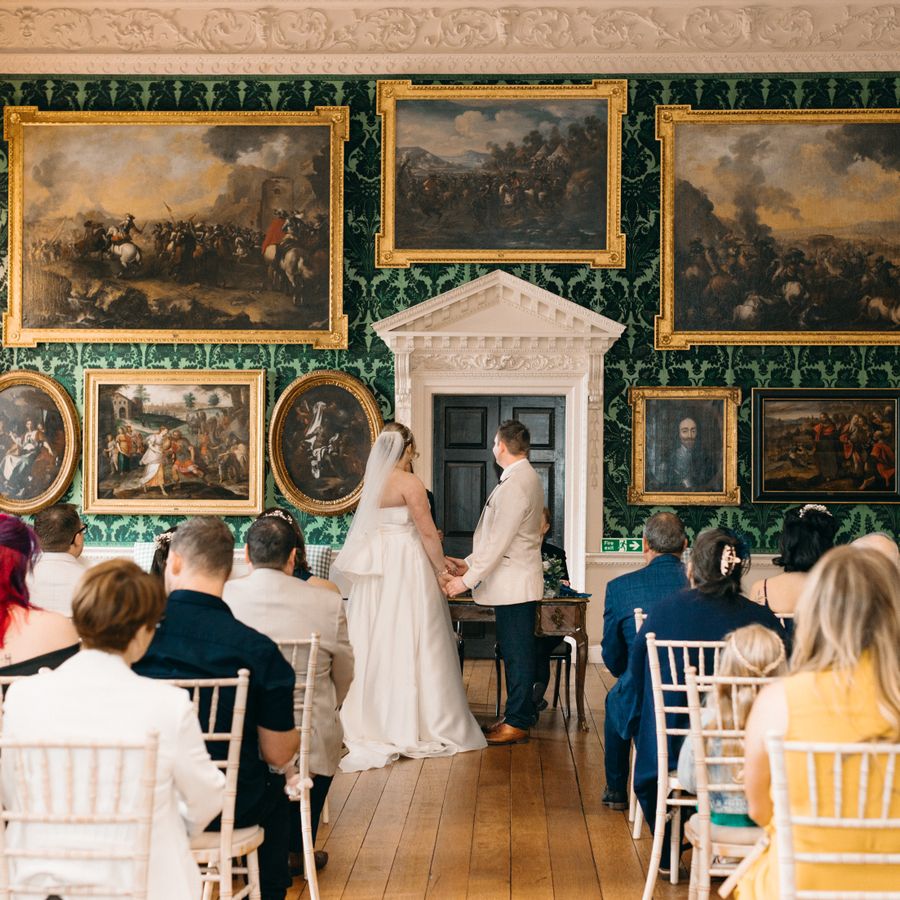
The 18th century was a period which saw great change and continued wavering fortunes at Temple Newsam. During his Grand Tour of 1704-7, Edward, the impetuous future 4th Viscount Irwin, spent extravagantly, which included buying the many seascapes, landscapes and battle scenes by Antonio Marini which hang on the Picture Gallery’s walls today. His eventful Grand Tour also involved illegal duelling and an apparently controversial relationship with his tutor. He also employed William Etty to remodel the park, creating the distinctive East Avenue that can still be enjoyed today. Find out more about Edward, 4th Viscount Irwin on YouTube

Dying of smallpox in 1714, he was succeeded by his equally extravagant and reckless younger brother Rich. Rich bought vast quantities of silver and invested heavily in the South Sea Company, which sold enslaved Africans to South America following the conclusion of the Spanish War of Succession. The stocks of this company spectacularly collapsed in 1720, becoming known as the South Sea Bubble. This caused great harm to Temple Newsam’s finances, but largely had to be dealt with by Rich’s younger brothers after Rich too died of smallpox in 1721. 

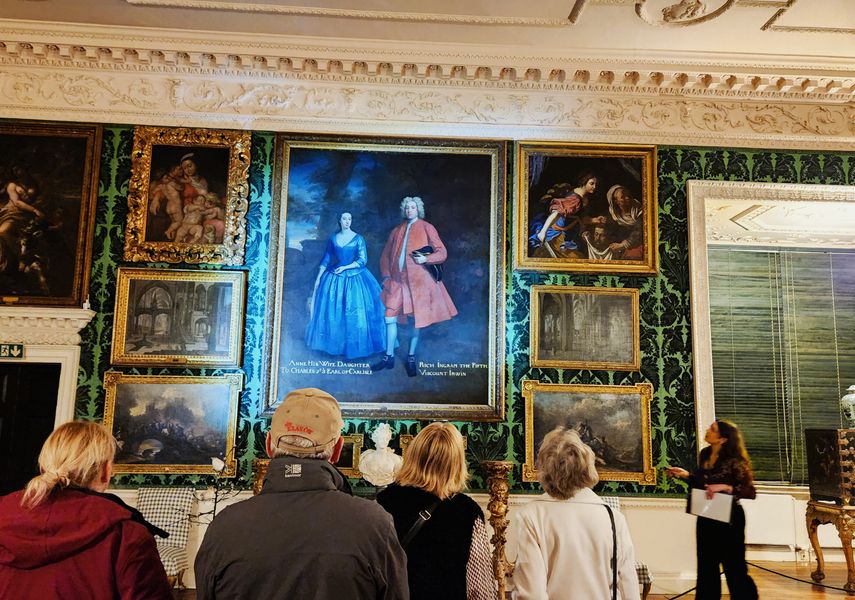
Despite this period of relative austerity, great changes were made to the house in the 1730s and 40s by Henry, 7th Viscount Irwin. The stable block still present today was built, along with another set of buildings in mirror image to the south-east of the house. Internally, the Jacobean Long Gallery in the north wing became the Picture Gallery and Library you see today. The Gallery was hung with grand portraits and the Marini pictures Edard had bought in Italy, and was furnished by a suite of carved and gilded furniture by James Pascall of St Martin’s Lane in London. The suite has (nearly) all returned to the room since 1938, and along with many of the paintings, the room is the most complete grand interior of its period and style, creating one of the most spectacular rooms found in England. Other rooms in the west wing were also reconfigured at this time. Find out more about The Picture Gallery here.

The fortunes of Temple Newsam took a dramatic upturn with the marriage of Charles Ingram (future 9th viscount) to the illegitimate heiress, Frances Shepheard. Ironically, much of her wealth can be attributed to the South Sea Company, as her grandfather, Samuel Shepheard Senior, who built the family fortune which she was the ultimately sole inheritor, was the head of the company at its peak and on his death in 1719. Samuel Shepheard was one of the richest men of his day, making his money from colonial trading companies. At his death his wealth was worth the equivalent of around £29bn today. As well as his key role in the South Sea Company, he also had sat of the boards of the Esat India Company and the Royal African Company. The latter was responsible for transporting more enslaved Africans to the Americas than any other in history, accounting for death and suffering on an industrial scale. Find out more on YouTube.

The grandeur and luxury that Temple Newsam reaped from France Shepheard’s wealth sits in stark contrast to this. Her fortune allowed old masters paintings to be bought, Lancelot ‘Capability’ Brown was employed to remodel the park in the 1760s, and in her widowhood, Frances completely remodelled the south wing during the 1790s, giving the house its final form.

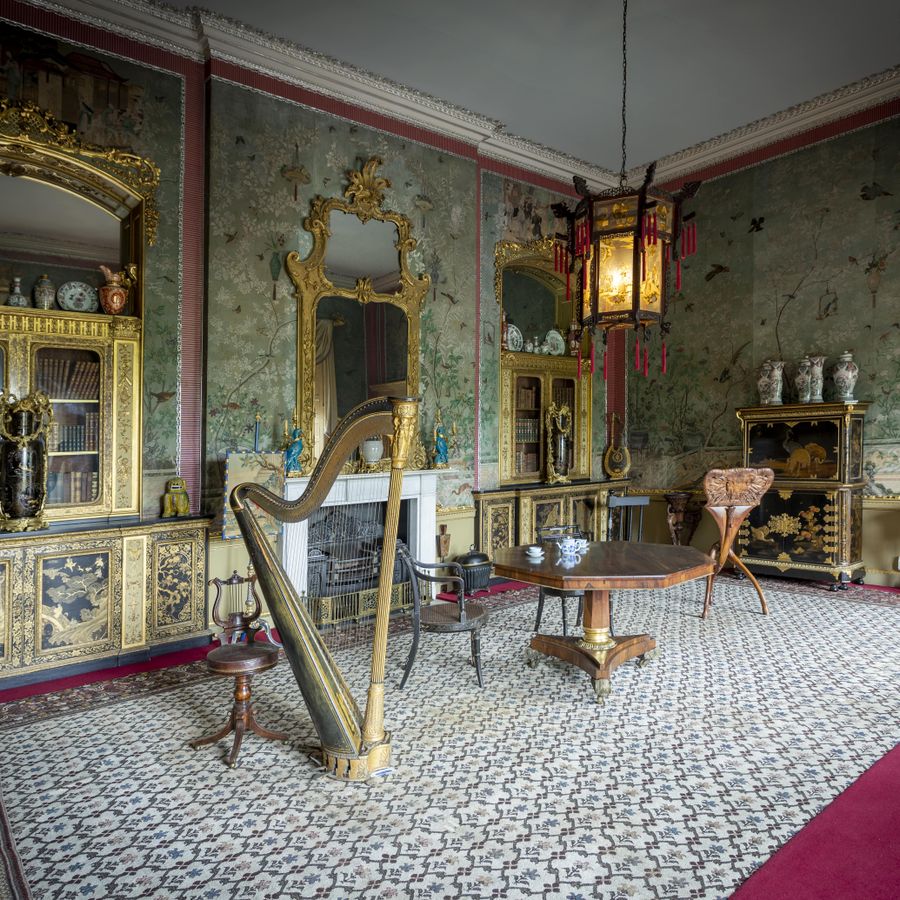
Charles and Frances’s happy marriage was cut short by Charles death aged 50 in 1778. They had no sons, meaning Charles title became extinct, but they had five daughters. Charles’s death ushered in a long period of Temple Newsam’s history largely dominated by women, lasting until the early 1900s. Frances was succeeded by her eldest daughter, Isabella, the Marchioness of Hertford in 1807. Lady Hertford [AT6] [AT7] left some of the most memorable marks on house and is best known for being, allegedly, the Prince of Wales’s mistress. She redecorated several of the new rooms her mother had created on the south wing, including the Great Hall, in an early example of Jacobean revival style. In 1826 she also transformed the Best Dining Room into the Blue, or Chinese, Drawing Room. Here she hung a Chinese wallpaper that is said to have been a gift from the Prince of Wales on his visit to Temple Newsam in 1806. She adorned the wallpaper with birds cut out from James John Audubon’s celebrated publication, Birds of America. Prior to this, Audubon had visited Temple Newsam in 1807 and Lady Hertford had subscribed to the first volume. Audubon instructed his printer to ‘spare no pains to render’ Lady Hertford’s copy ‘as perfect as possible’. Audubon learned of Lady Hertford’s unconventional use of his illustrations shortly after her death in 1834. Rather than being horrified, he was quite proud that she had decorated one of her ‘Superb Rooms’ with his birds. In 2010, a full first-edition of Birds of America sold for a world record £7,321,250!

Find out more about Lady Hertford on YouTube.

Victorian Temple Newsam

Following Lady Hertford’s death, Temple Newsam passed to her younger sister, Frances, Lady William Gordon for a short while, before being inherited in 1841 by Hugo Charles Meynell-Ingram, the son Hertford and Gordon’s younger sister, Elizabeth Meynell. The house was little used except for the shooting season and went into somewhat of a slumber. However in contrast to lack of domestic activity, at this time, the estate’s natural resources began to be more fully exploited, with expanded coal mining bringing even greater fortunes to the family.  

When Hugo Charles died in 1868, he was succeeded by the last direct descendent of Sir Arthur Ingram, Hugo Francis Meynell-Ingram. He died in 1871 after a hunting accident, leaving his childless widow, Emily, his vast estates. Overnight, she became one of the richest women in the country, sole owner of 16 estates in Yorkshire, Lincolnshire and Staffordshire. Although crippled by grief and depression throughout the rest of her life, Emily loved and took solace in Temple Newsam, spending much time there and making many changes[AT1] [AT2] . These largely revolved around removing Georgian features, such as sash windows and the 1770s Neo-Classical staircase by James Wyatt. In their place, revivalist features were installed that harked back to Temple Newsam’s illustrious Tudor-Jacobean origins and royal connections. Most notably this includes the spectacular late-Tudor style Oak Staircase designed by C.E. Kempe. Money was no object to Mrs Meynell-Ingram, but she deliberately avoided modernising the house in many respects. Although running water was installed, electricity was not, and gas lighting was limited to backstairs rooms, with Emily preferring the light from candles and oil lamps.

Find out more about Emily Ingram on YouTube.

The 20th Century and the End of Private Ownership

Emily Meynell-Ingram died in 1904. Childless, Temple Newsam was left to her nephew, Edward Wood. Although not Wood’s main seat, after his marriage in 1909 he did spend considerable time at the house and made some changes, including creating a new library (his aunt had converted the 7th Viscount’s Georgian-period library into a chapel in 1877). During the First World War, the south wing was used by wounded soldiers for convalescence. 

During Wood’s period, the days of Temple Newsam as a country estate were quickly becoming numbered as the City of Leeds expanded eastwards.  In 1909 the City purchased 600 acres of the estate at Knostrop by compulsory purchase to create sewerage works. Ironically, the encroachment of Leeds in turn created the conditions for the estate being saved when many country houses were struggling and being abandoned. The park was viewed by the City as an ideal large green space for its residents, as Roundhay Park had been acquired some 50 years earlier. So in 1922, Wood sold the park of 917 acres and the house for the relatively nominal sum £35,000 to the City of Leeds (the 600 acres of Knostrop were bought for £149,000). 

Tradition dictates that the contents were offered for a further £10,000, but this was declined. Whether true or not, most collections left the house in the summer of 1922, when they were either removed by Edward Wood to his other houses or were sold in a seven-day auction. The park and largely empty house officially opened to the public on 19 October 1923. Two 18-hole golf courses and a tram from the city to the estate were quickly established thereafter, cementing the importance of the estate to its new owners – the people of Leeds. 

Whilst in hindsight is regrettable the Ingram family collections could not have been kept at Temple Newsam, this is pivotal moment in the history of the house as it set the conditions for the development of the world class museum collection that can be enjoyed today. 

Edward Wood is best remembered as Lord Halifax, the title he later achieved, and his political career, which saw him become Viceroy of India and Neville Chamberlain’s Foreign Secretary at the outbreak of World War Two. But in respect to Temple Newsam, he was a great supporter of the house long after he sold it. In 1948, he donated some 125 paintings that had previously been at the house and was longstanding President of the Leeds Art Collection Fund.

For the last 100 years Temple Newsam has been owned by the City of Leeds for the enjoyment of all. In that time, Temple Newsam’s deep history has been supplemented by one of the greatest collections of fine and decorative arts in Britain. Discover this treasure trove of furniture, ceramics, textiles, silver and wallpaper in a remarkable country house setting.

Upcoming events at Temple Newsam House

Put me on the waiting list

Wish list

Added:

To wishlist