
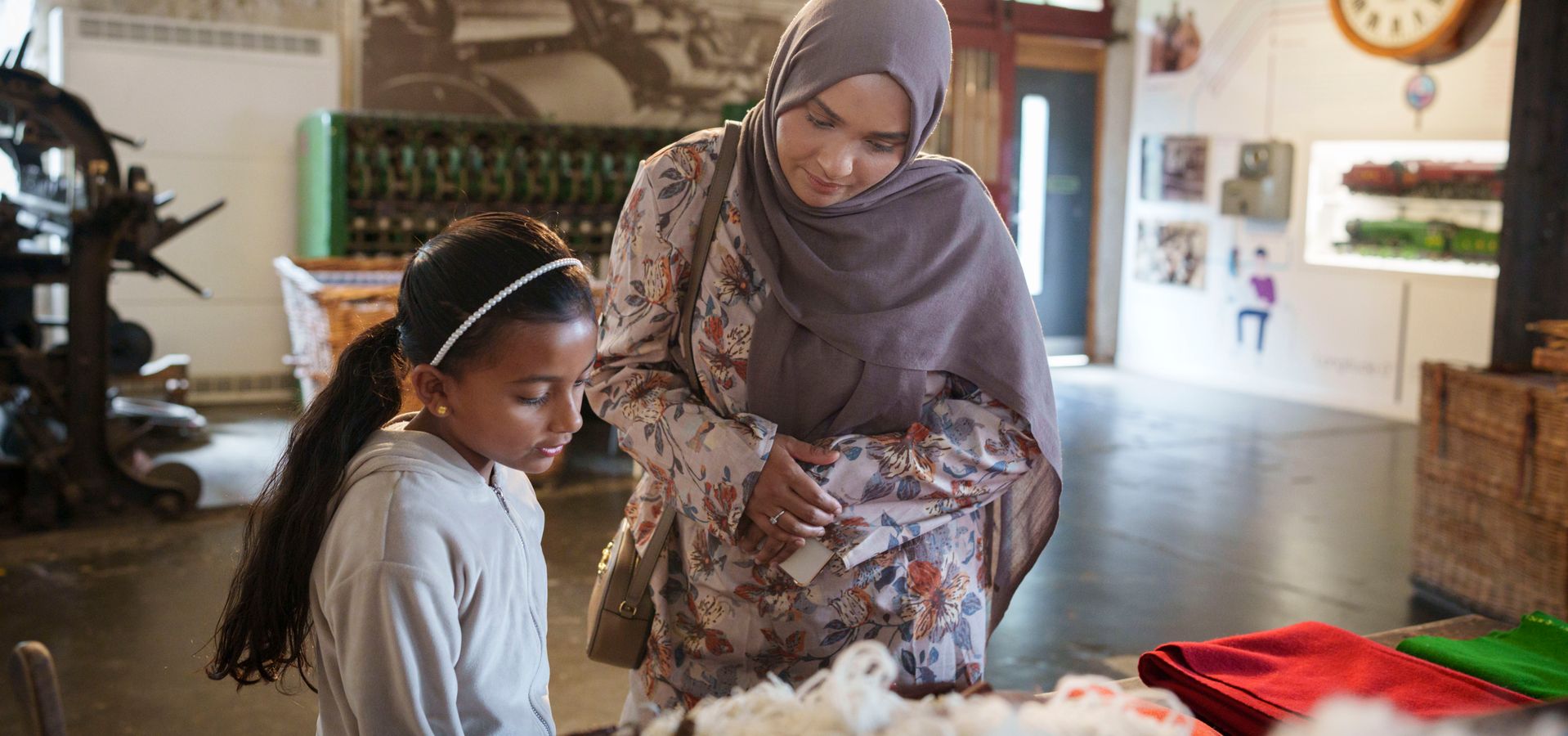
Galleries at Leeds Industrial Museum
Discover our gallery spaces which showcase industrial history in Leeds.
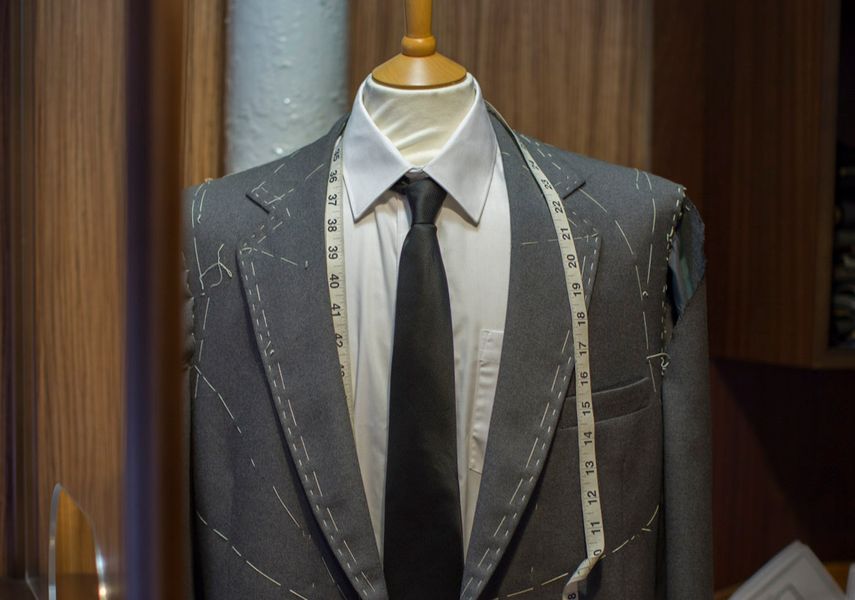
The Tailoring Galleries
Discover how Leeds helped to launch high street fashion through pioneers including John Barran, Joseph Hepworth and Montague Burton. For over a century, Leeds dominated the production of men’s suits in Britain, bringing unparalleled prosperity and employment to the city.
The tailoring gallery explores the vital role these tailors played in clothing the nation. At the industry's peak, the Leeds-based manufacturer Burton’s clothed approximately one in every five British men for work, war, and leisure.
Step into our recreated 1950s Burton’s shop to experience life as a customer. Choose your fabric, select your style, and imagine the bustle of a shop where hundreds of measurements were taken daily to ensure the perfect fit.
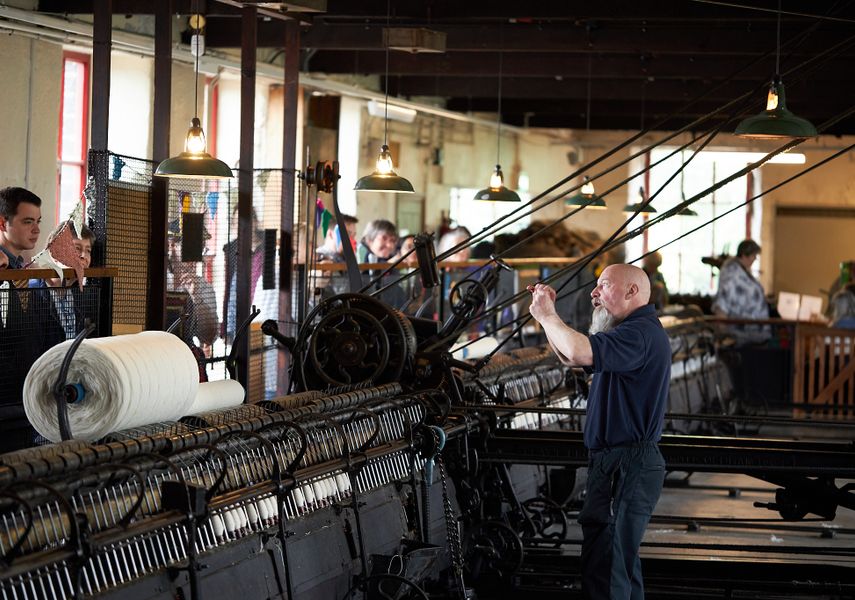
The Textile Gallery
Explore our textile gallery as it displays the vital processes of woollen cloth production for which Leeds became famous, preserving both the machines and the atmosphere of a local mill at the turn of the century. Our collection of historic machinery tells the story of the thousands of people who worked here during the height of the textile boom.
A vast area of the textile gallery is taken up by two enormous woollen spinning mules, that are an impressive throwback to Leeds’s industrial past. The pair of spectacular machines were both manufactured by Platt Brothers and Co in Oldham and date from 1871 and 1904, when they were used to spin textile fibres into yarn.
Through a generous donation of the family’s personal archive by Liz Tempest, visitors can now explore the Tempest room at the museum. This display of photographs, site plans, and business records offers a rare glimpse into the mill's final chapter.
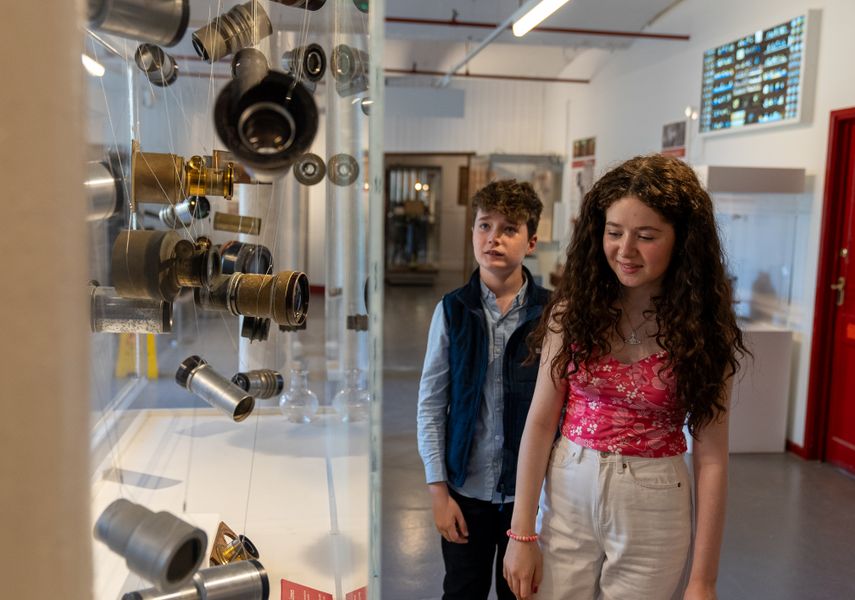
Media gallery
Celebrating the creative industries of Leeds, the Media in the Mill gallery showcases historic cameras, projectors, and printing equipment alongside a recreated 1920s cinema. Here, you can explore Leeds’ cinematic legacy—dating back to 1888 and the inventor Louis Le Prince, who used his pioneering camera to capture the world’s first moving images. Find out more about Louis Le Prince.
Discover our collection of Kershaw & Sons projectors, equipment so renowned for its quality that it accompanied Captain Scott on his expeditions to Antarctica. You can also trace the evolution of the printing trade, from the city’s early workshops to its 1911 peak, when 8,000 people were employed in the industry. Watch live demonstrations of traditional printing techniques and learn about the local jobbing printers, like William Witt of Bramley, alongside big firms with international reach like John Waddington—the firm famous for producing Monopoly.
Powerhouse Gallery
Engines are machines that do work, whether it’s powering your car, pumping water or making other machines. Engines of all shapes and sizes helped Leeds become a powerhouse in the industrial revolution. Explore the technology that allowed us to build the world we live in today.
Home to a whole host of steam engines both large and small, our world famous collection can be viewed up close in our lower level Powerhouse gallery.
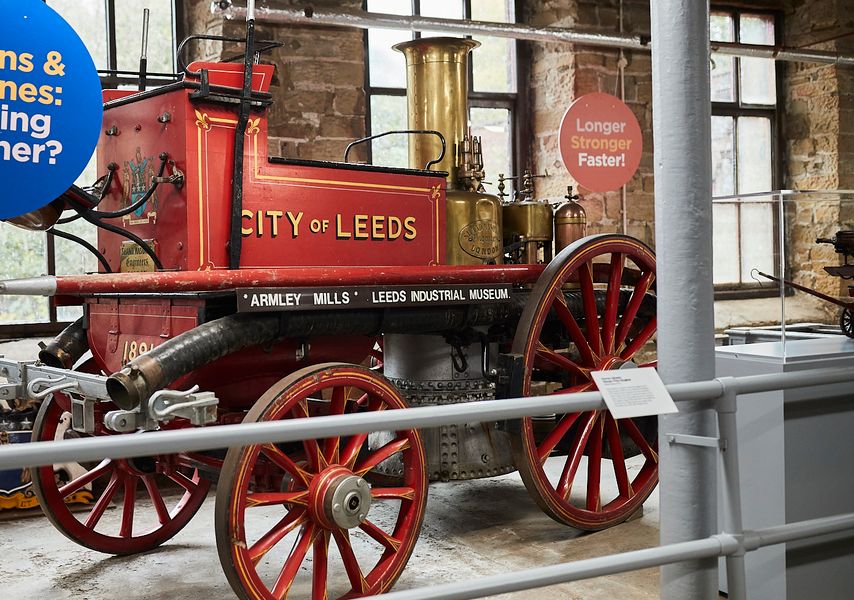
Discover a City of Leeds fire engine from 1891, the most successful steam engine of its time, engines from Leeds based engineers John Fowler & Co., Carrett Marshall & Co., Hattersley, Pickard & Co. and Greenwood & Batley Ltd. and more. You'll even find the 1871 Mill Engine that powered all of Armley Mills, and is still in working order.
Powerhouse features objects kindly loaned by the Thackray Medical Museum showing how modern technology can help keep our bodies working efficiently.
Palace Picture House
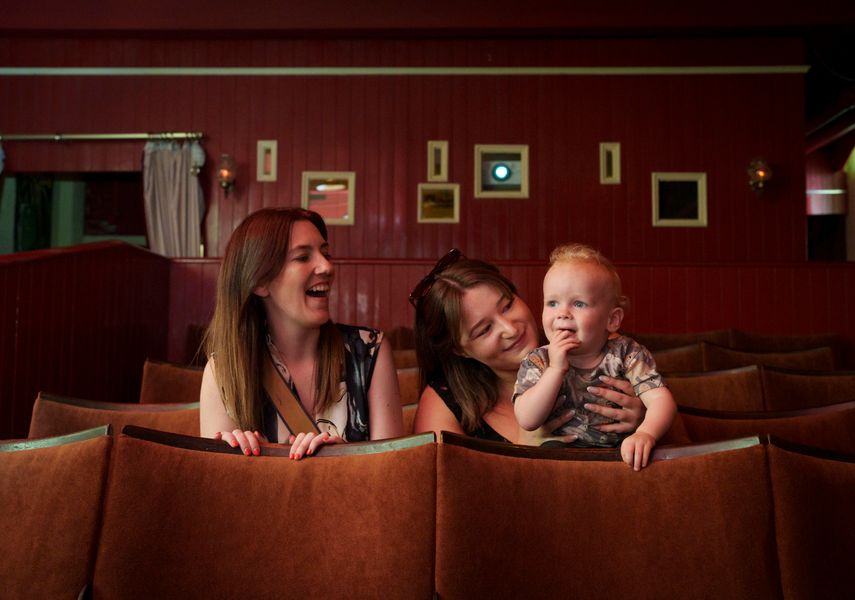
Discover the smallest cinema in the north of England during your visit to Leeds Industrial Museum.
Leeds played a key role in the story of film, which is told in the media gallery. The 26 seat cinema echos Leeds' history and it's close Armley roots.
Changing Exhibitions
Leeds Industrial Museum holds special exhibitions inspired by our collection and the industrial history Leeds.
Grounds and Gardens
Discover The Colour Garden, which echoes the museums roots with fabric dyeing in the textile industry with glorious views of the canal.
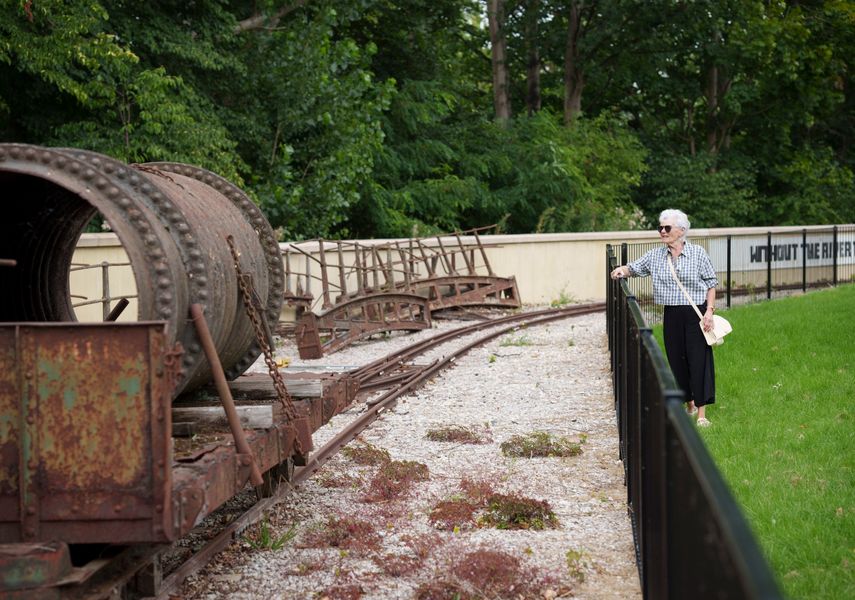
Wander down the cobbled pathway to find our new, accessible picnic grounds. Along with larger industrial items from our collections, you'll find our community orchard, the air raid shelter entrance and a wilder side to the museum.