
Textiles, Trades and Temple Newsam: Shopping in 1703 - Part 2
Follwing on from Part 1, we're understanding a bill from a certain Sam Richardson, dating from 1703 which details work carried out between 1701 and 1702 relating to bedroom textiles.
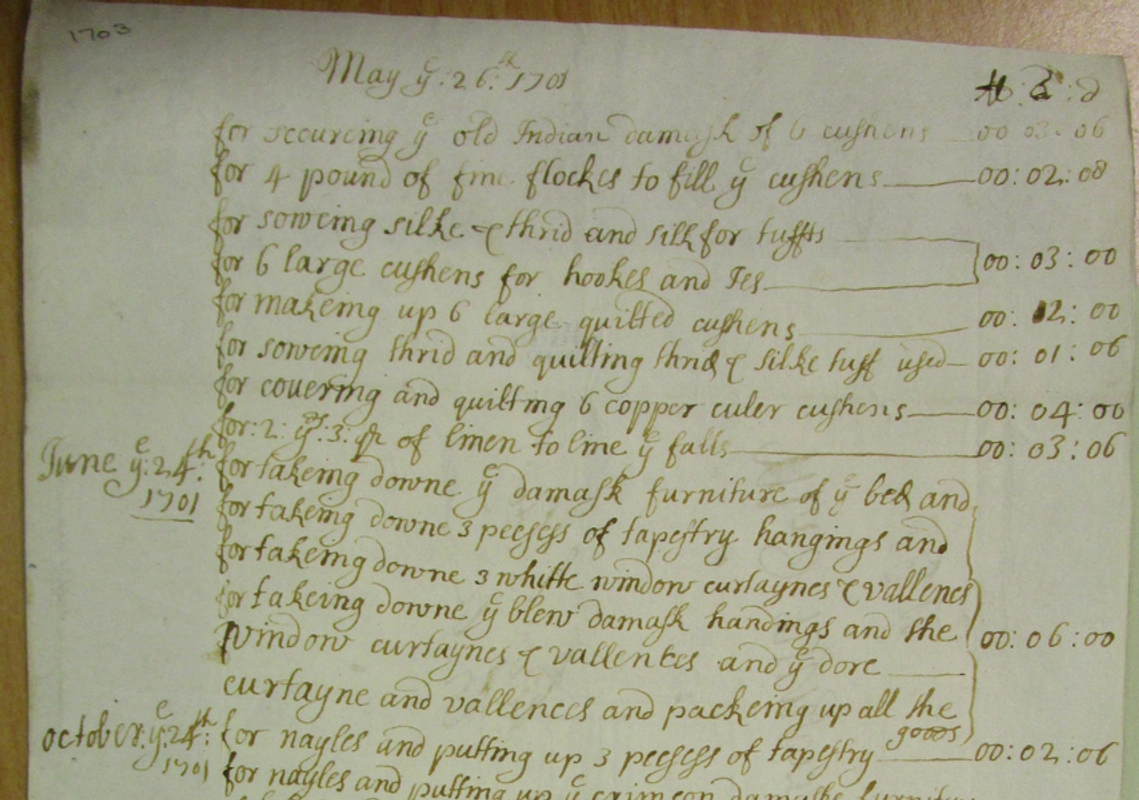
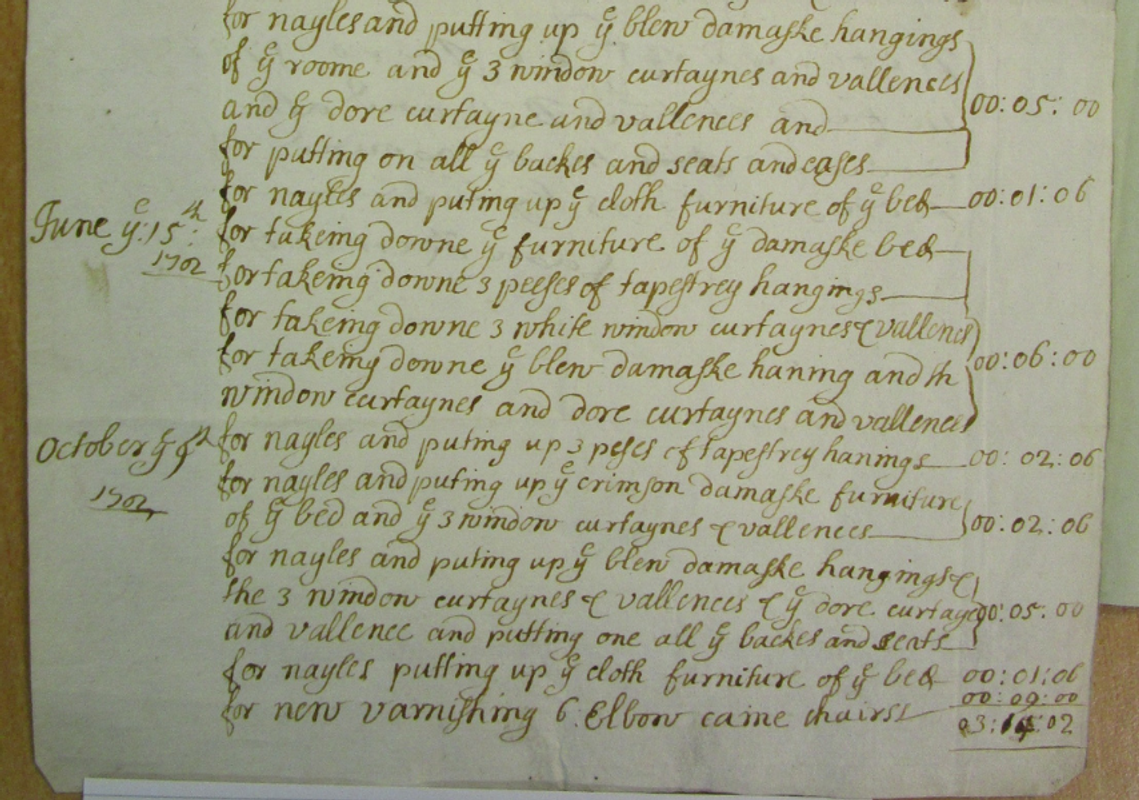
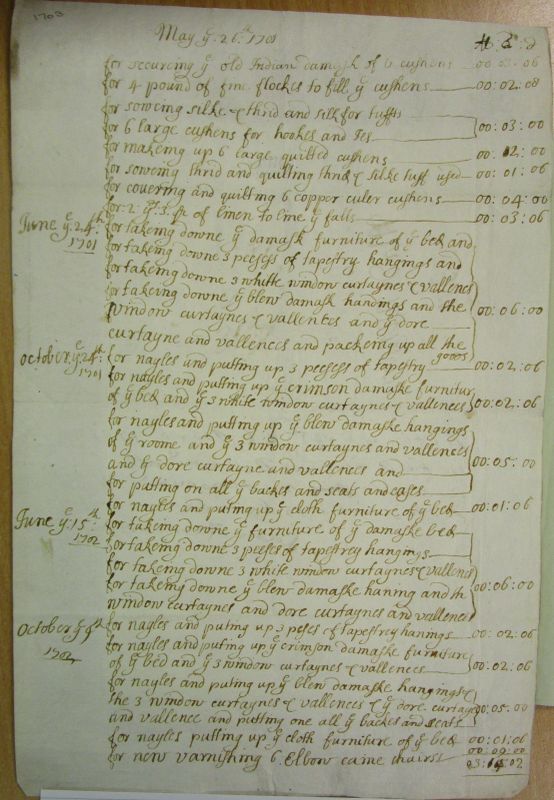
The first item of the bill is the making of two sets of quilted cushions with all the component parts listed. The rest of the bill accounts for the seasonal routine in which the bed hangings, curtains and tapestries were removed and packed away in the summer and reinstalled in the autumn, over a period of 2 years (1701 and 1702). This may refer to one bedroom or perhaps more than one. We don’t know the exact location of the room or whose bedroom it was. However, the fact that an external tradesperson was hired to carry out this seasonal routine is an indication of the value placed on textiles, particularly those of the bedroom.
The Golden Age of Upholstery
The date of this bill sits firmly in what has been described as the ‘golden age of upholstery’ which began around the 1680s and lasted until shortly before the middle of the 18th century. It was the period in which the upholsterer was considered more important than the cabinet maker. This period also represented a high point in all kinds of embellishment including tassels and trimmings. Therefore, at the time of this bill, it was the hangings and upholstery, rather than the wooden furniture itself, which established the aesthetic concept (through the colours, textures and shapes) and conferred the owner’s wealth and status. Later in the century, the skills of the great cabinet makers shifted the balance between wood and textile.


Looking at The Angel bed on display at Temple Newsam, we can get an idea of what Sam Richardson was dealing with. We do not know if the bed in this bill of 1703 was as grand as the Angel Bed, but it is safe to assume that it was considered important, given the work done to care for it.
It is worth noting that all but the humblest of beds would have had hangings of some kind. The status of a bed, therefore, was entirely demonstrated by the quality and richness of the hangings.
Luxurious Damask
The main textile mentioned in this document is damask and was most likely to be silk damask. Where had it come from? We know that the silk industry was boosted by the arrival of the Huguenots into England from the 1680s. But what was the level of production at that time? Given the early period, was this damask most likely imported? Had the damask been bought in London? Or through a merchant based in the north?
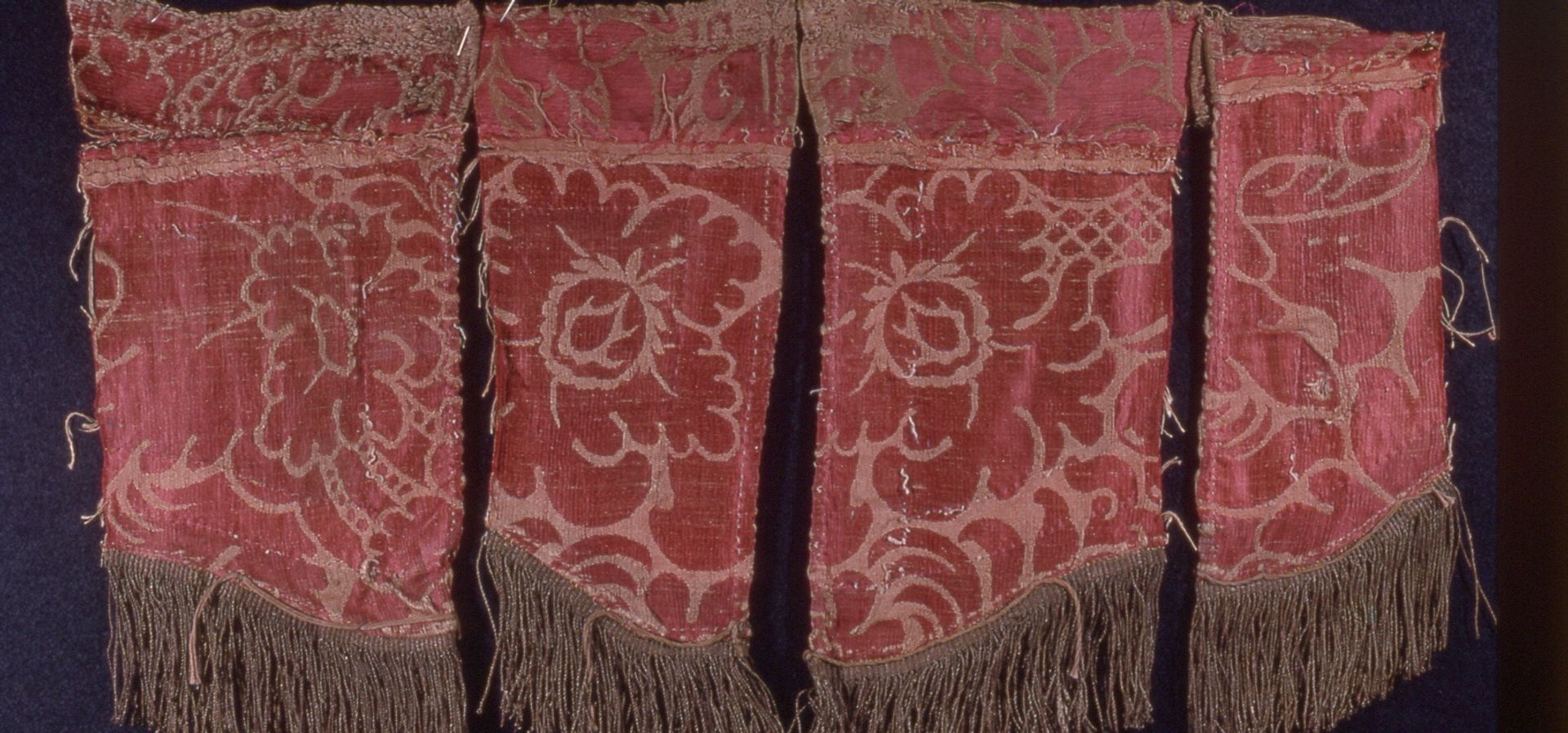
See examples below of silk damask from the Temple Newsam collection, dating to the early 1700s which is the same period as the document
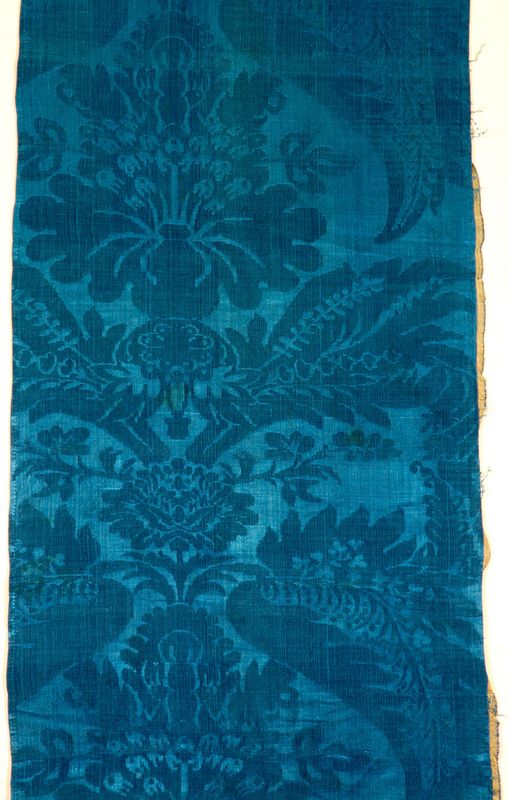
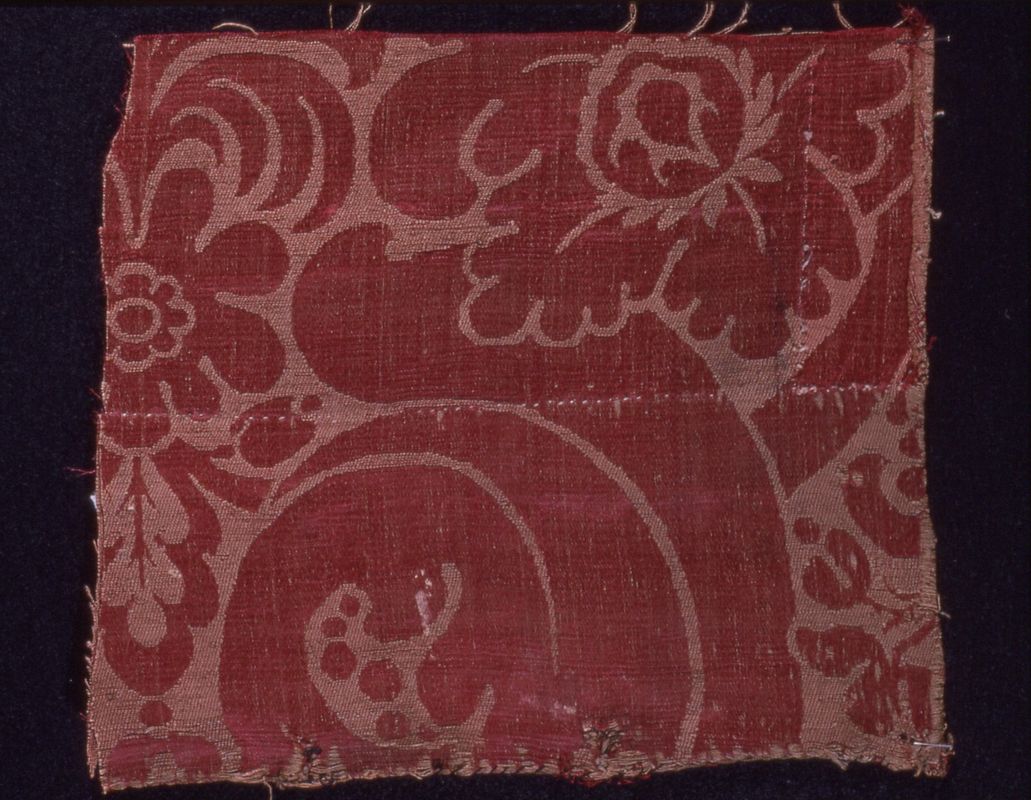
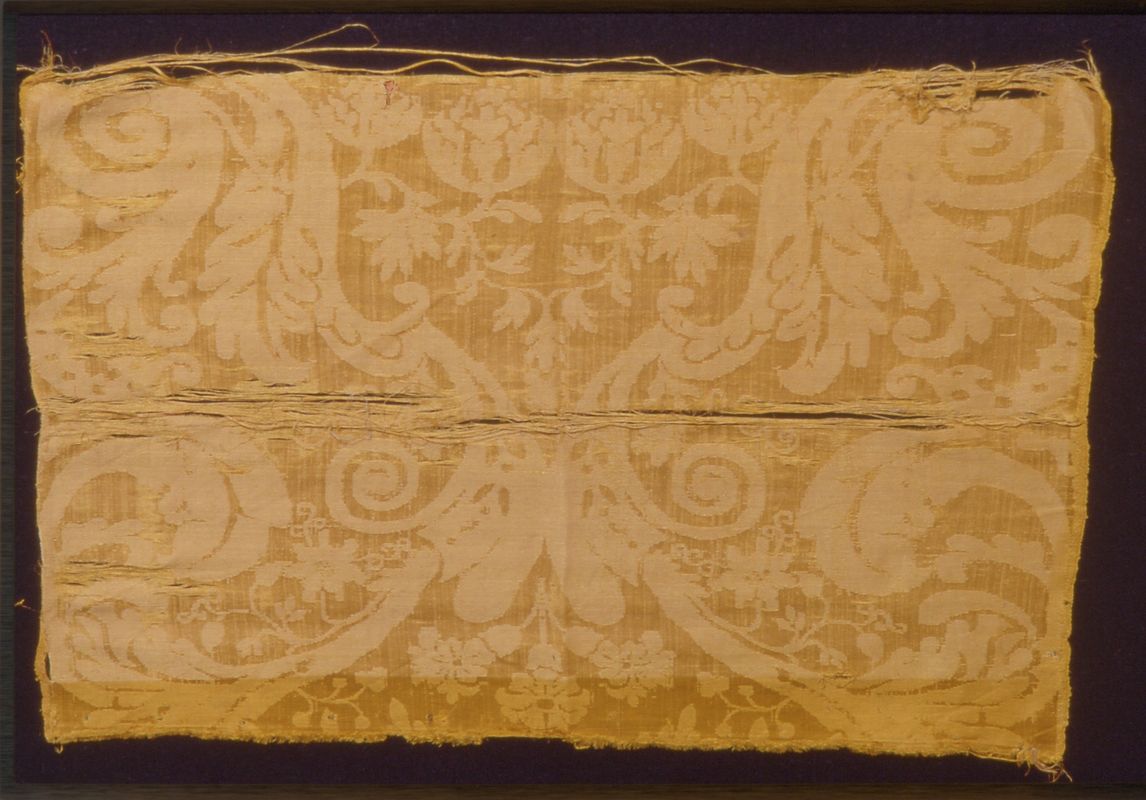
Silk damask is without doubt a luxurious and impressive fabric. In addition, the repeat patterns which are typical of damask especially of this period, made it especially suitable for bed curtains as the long length could show off the repeat to great advantage and again emphasise the costliness of the material.
The significant of colour
The colours mentioned in the bill in relation to the bed are crimson and blue. Certain colours had associations of rank and the virtues, although this was not adhered to religiously. The reds, including crimson and scarlet were associated with persons of noble birth, while blue, which came third after green in the hierarchical ranking, was said to signify piety and sincerity.
The white window curtains mentioned in the receipt at first seem a little incongruous or plain alongside the rich damasks and tapestries. While it was the practice in the late 17th and early 18th century for curtains to match the rest of the upholstery in the room, contrasting white curtains were also used. Certainly, the simplicity of the curtains would have meant that the eye was drawn to the main event – the bed.
The finishing touches
Let us not forget the other items on the bill. There are 6 cushions in ‘Indian damask’ and 6 ‘copper colour’ cushions. All the elements for making the cushions are also listed: silks (presumably for sewing), quilting, fillings and tassels as well as the labour.
Fine cushions were indicative of wealth and refinement. The tassels and trims, which today we now take for granted, were the product of incredibly skilled and painstaking workmanship and were therefore very expensive. Whether these were for the bedroom or another room, we cannot be sure.
Were the fabrics and trimmings bought in London? What of the ‘Indian’ damask? Was it really from India, or was this a catch-all term to indicate something imported from a distant country?
What of the tapestries? Were these of the period, or were they older? Without seeing an inventory, it would be very hard to know.
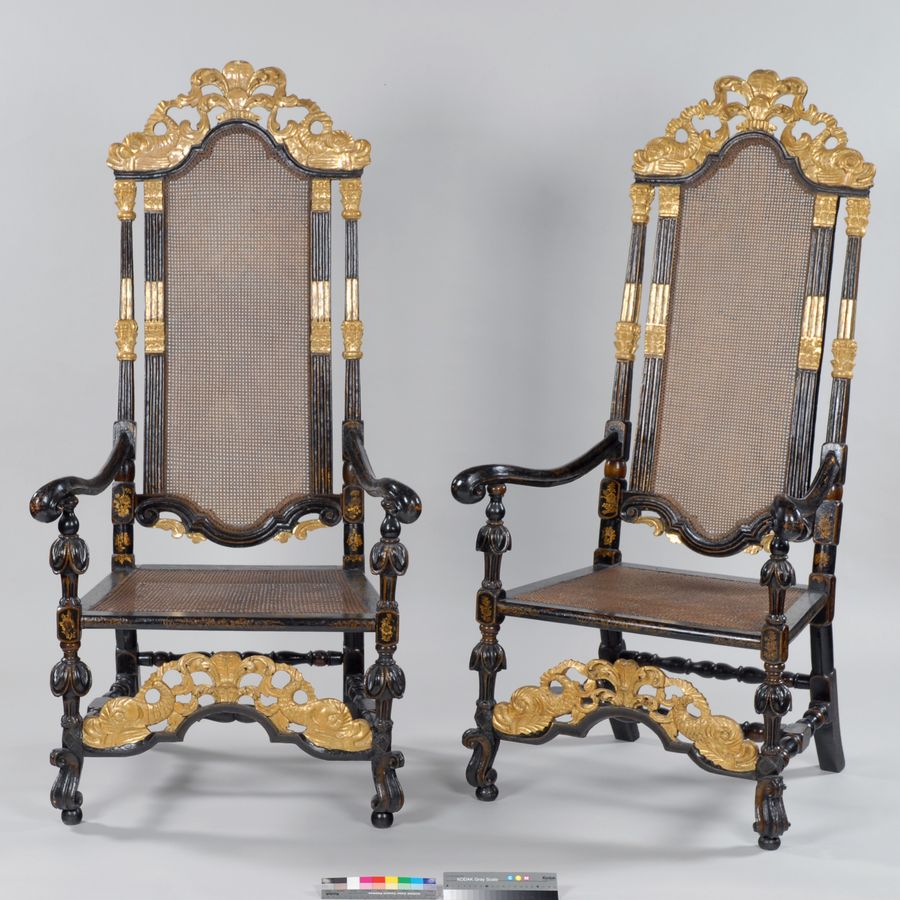
Finally, the seating furniture. We infer from the bill that there were chairs with upholstered seats and backs (the bill mentions covering the seats and backs). However, in October 1702 the bill mentions varnishing cane seating. This was a popular form of chair in the late 17th and early 18th centuries. Were these all for the same room, or did the caned chairs replace the upholstered ones?
As it often the case, the ‘to do’ list of unanswered questions seems to be longer than when I started out!
By Liz Kilburn, Temple Newsam Archives and Textile Project Volunteer