
Textiles, Trades and Temple Newsam: Shopping in 1703 - Part 1
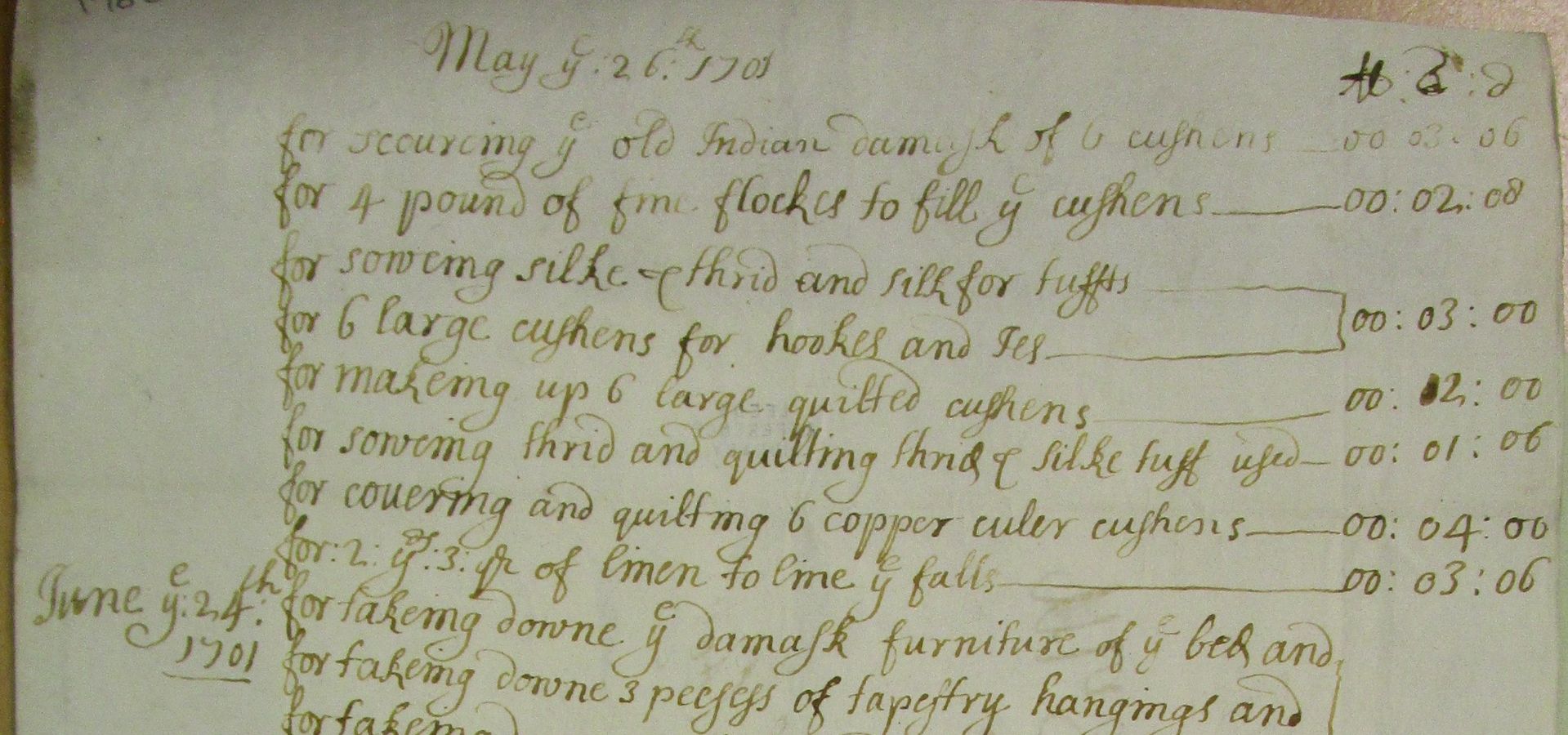
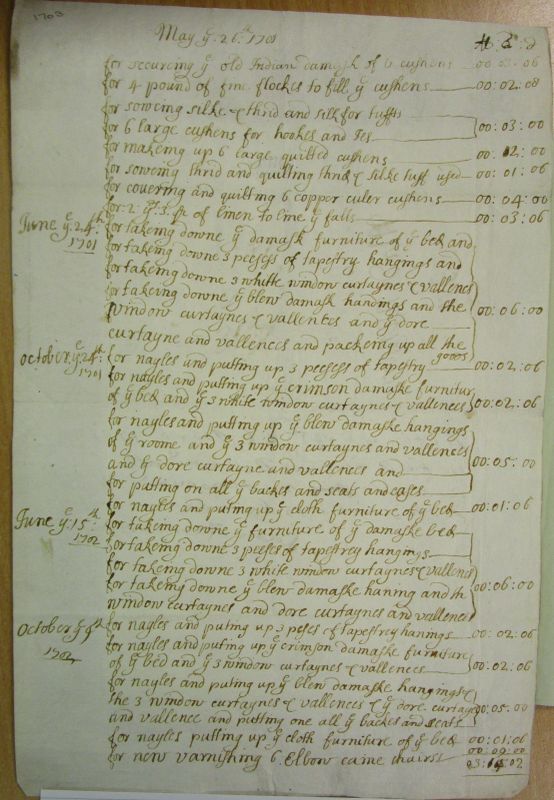
The Temple Newsam archive held in West Yorkshire Archive Service is a rich source of information on the importance and role of textiles in the 1700s. I, a Temple Newsam Archives and textile project Volunteer, have been researching a bill from a certain Sam Richardson, dating from 1703 which details work carried out between 1701 and 1702 relating to bedroom textiles.
Why is this document interesting?
Although the hand is difficult to read it appears to be addressed to Madam Winsor.
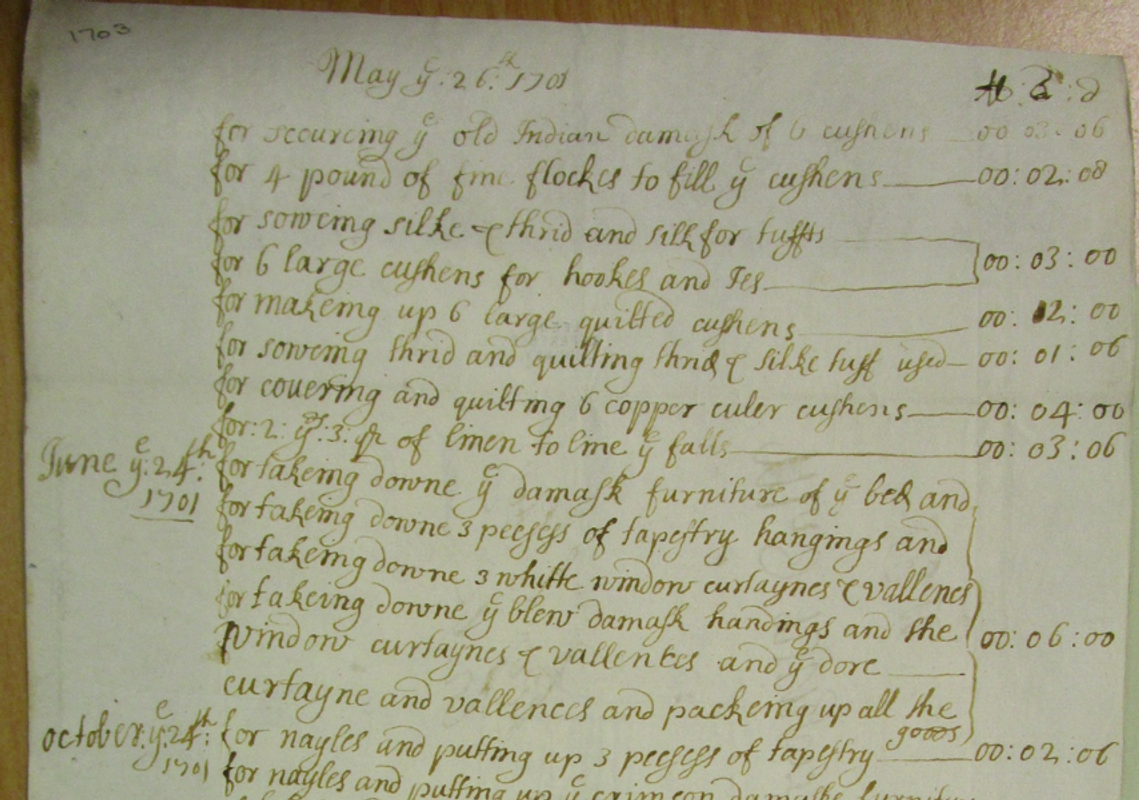
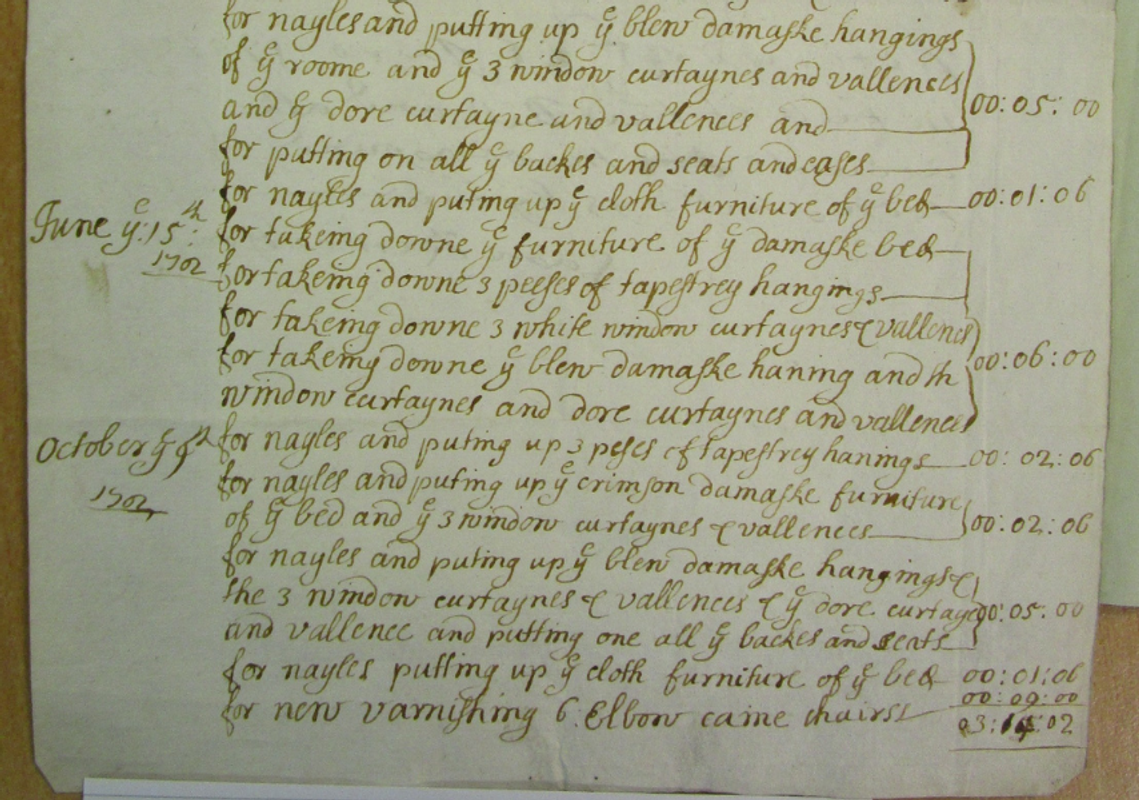
As can be seen from the image, the bill is divided into five dated sections:
- May 1701: covers the materials and labour for what appear to be rather elaborate cushions, namely 6 large quilted cushions and 6 copper colour cushions. The materials include ‘Indian damask’, silks, quilting, fillings and tassels.
- June 1701: damask bed hangings, tapestry hangings, white window curtains and valances and door curtains are taken down and packed away. Blue damask is mentioned here.
- October 1701: curtains and hangings are put back in place. The bed textiles are nailed on. There is a reference to crimson as well as blue damask and possibly to chair seats and backs.
- June 1702 and October 1702: the process is repeated. In October 1702 caned chairs are also mentioned, which are to be varnished.
- On the reverse of the sheet, we see confirmation that the bill was paid in 1703.
So, in addition to what must have been quite elaborate cushions, this bill bears witness to a seasonal routine of curtains, bed hangings, tapestries and other important textiles being taken down in the summer and reinstalled in the autumn. This task was carried out by an external tradesperson brought in specially for that purpose.
The seasonal changing of curtains and hangings was not especially unusual. There were practical as well as aesthetic implications because of the change in temperature and to protect the rich fabrics from sunlight. All well and good, but if this were the case here, why is there no mention of summer fabrics? Were these bedrooms not used in the summer? Were the principal members of the family staying elsewhere?
Why could this not have been carried out by the household servants?
The answer may lie in the fact that fine textiles, particularly bedroom textiles, were extremely expensive and highly prized. The bill specifically mentions nails which is how the upholstery of the bed was attached to the frame. This would have required specialist knowledge and skill to ensure the proper hang and to avoid damaging the fabrics.
This careful work, done as part of a seasonal household routine, was, it would seem, too specialised to be given to the regular household servants. Sam Richardson (and possibly his assistants) therefore had access to one of the most important rooms in house – the bedroom.
So, who was Sam Richardson?
This bill is evidence of the commercial interaction between the tradesman Samuel Richardson and the owners of Temple Newsam at the very beginning of the 18th century.
We know from the many receipts and bills from this period held in the archive that Lady Ingram of Temple Newsam and her household dealt with many local tradespeople who provided textiles and related services (sewing, mending, washing, tailoring for example) for the household. They also bought goods and services from London.
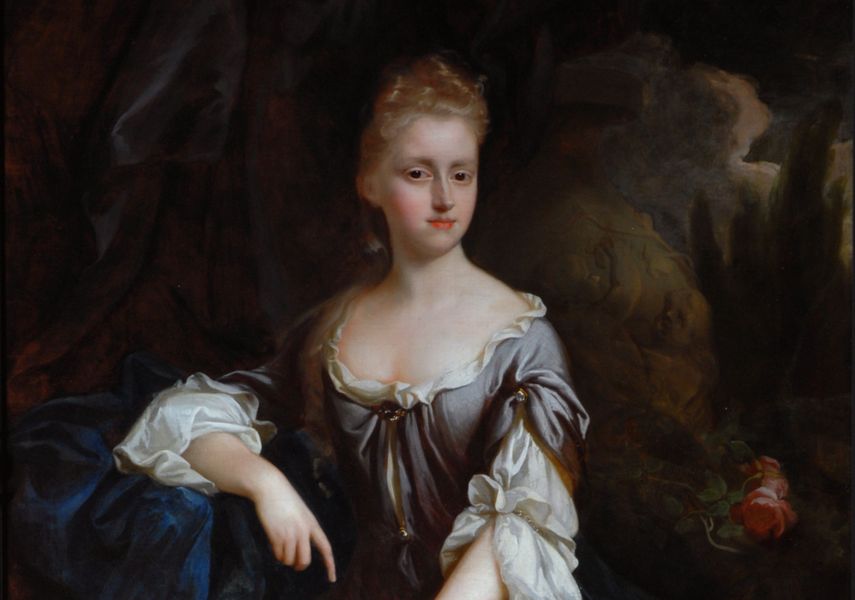
Portrait of Isabella Machell (about 1670 – 1764) Viscountess Irwin at the time Sam Richardson completed the work. Painting 1685-90, oil on canvas, attributed to Johann Closterman (1660-1711)
Some of the more important bills from tradespeople have letterheads, although these are few. This bill has neither a letterhead nor an address, which suggests that Sam Richardson was local and already known to the house. (Later in the century a journeyman known as a ‘calenderer’ would offer the service of removing and re-glazing the calico hangings, including bed hangings. Calenderers were not necessarily local and would cover large areas. This bill from 1703 pre-dates this practice and the use of calico.)
Given the date (1701-3) we have barely entered the 18th century. Therefore, the household routine and customs and the furnishings of the house, would have reflected the tastes and social structure of the 17th century. At the risk of stating the obvious, this bill represents the commercial interaction and interdependence of two very different levels of society. At the time of the receipt Temple Newsam was a noble household in the north of England which drew heavily on its links with London but also benefitted from the well-established commercial and technical expertise of the local area, particularly in the field of textiles. Furthermore, Leeds, although a provincial city, was by no means a sleepy backwater.
Limitations of the Document
The document tells us there was a bedroom important enough to warrant these seasonal changes, but we do not know whose bedroom it was, or even where exactly the room was located. We do not know if this work was for one or more rooms (two colours of damask are mentioned). It is not an inventory or a description. It only details the items on which Sam Richardson was required to work.
Finally, and integral to the transactional nature of this relationship, each item on the bill has been costed. This information is of limited value on its own, but very useful when seen as part of a wider picture of household expenditure.
Find out more about the pieces in this order and similarities to our collection in part 2.
By Liz Kilburn, Temple Newsam Archives and textile project Volunteer