
Fashion and Textiles: Delving into the Temple Newsam Archives
It all started with a request for volunteers on the Leeds volunteering site that caught my eye. This involved a project on the history of fabrics in Temple Newsam. Being a regular visitor to Temple Newsam and its glorious gardens, I joined a small group of people to take this project on.
We were given an introduction to the project and then taken to the West Yorkshire Archives in Morley. What an eye opener! It is a treasure trove of archival material going back hundreds of years. Boxes and files and scroll and sheets, all carefully listed and stored in shelves going up to the ceiling, somewhat like the Ikea warehouse!
The staff at the West Yorkshire archives are a friendly bunch. One can make a request to view any material on any topic, by sending them an email. They have an online catalogue that you can browse through. If there is any relevant information in their store they will get it out for you and arrange a date when you can visit their reading room and spend all day looking through the material. Of course with much of it being old, there are rules for handling and photographing the material. This is all explained clearly. And the staff are always at hand to answer any questions.
We looked specifically at the Temple Newsam boxes and files, which amazingly go back to the 1600s. We looked through numerous housekeeping records neatly and carefully handwritten by staff members some 400 years ago! It was mind blowing to think I was holding a piece of paper written by a real person who worked there all those years ago. If only I had a Time Machine!
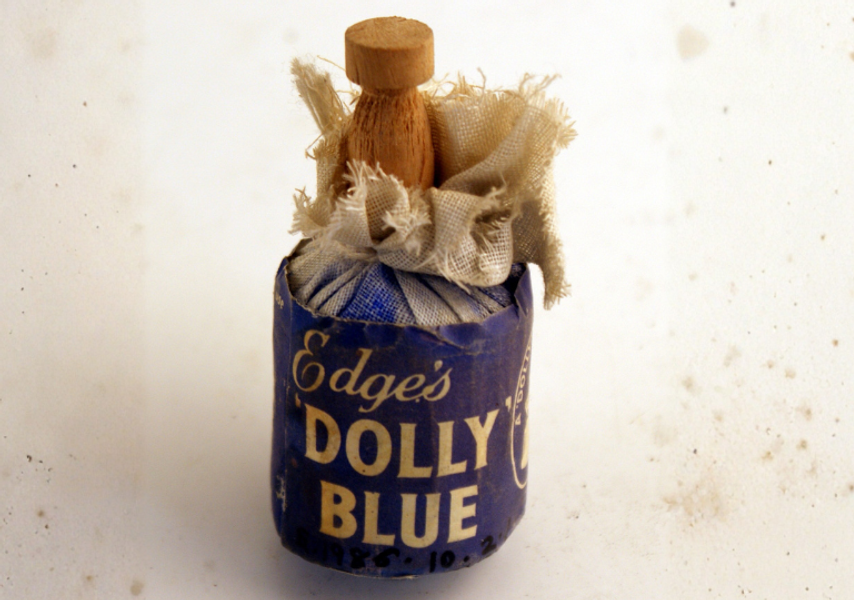
We found interesting accounts of items used frequently back in those days, many of which we don’t use any more. For example, “blue powder” frequently appeared in the inventory among food items. What was this used for, we wondered? On searching the internet, I found this….”Originally, powder blue, in the 1650s, was powdered smalt (cobalt glass) used in laundering and dyeing”. How interesting!
I remember my grandmother’s house using powder blue with rice starch to whiten and wash white clothes, regularly, in India where my family are from. Powder blue was used by many families up until the mid-20th century.
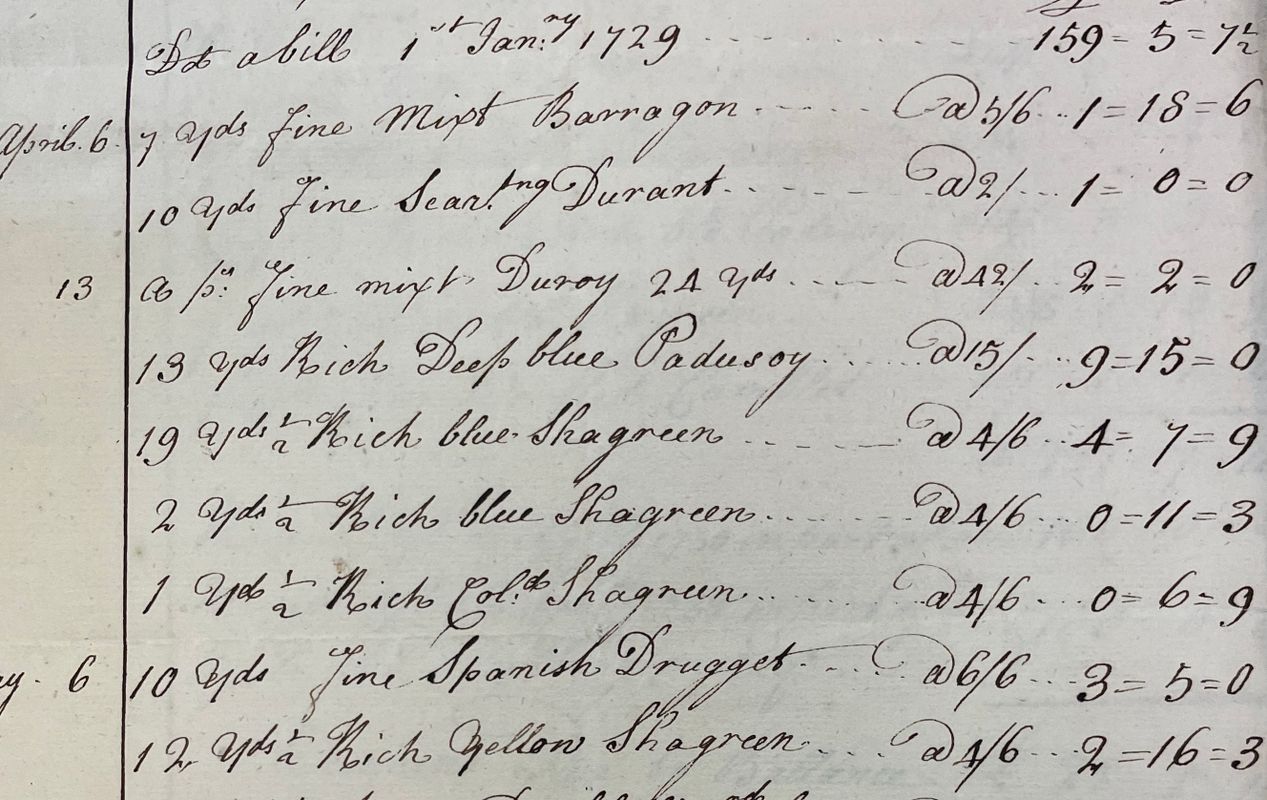
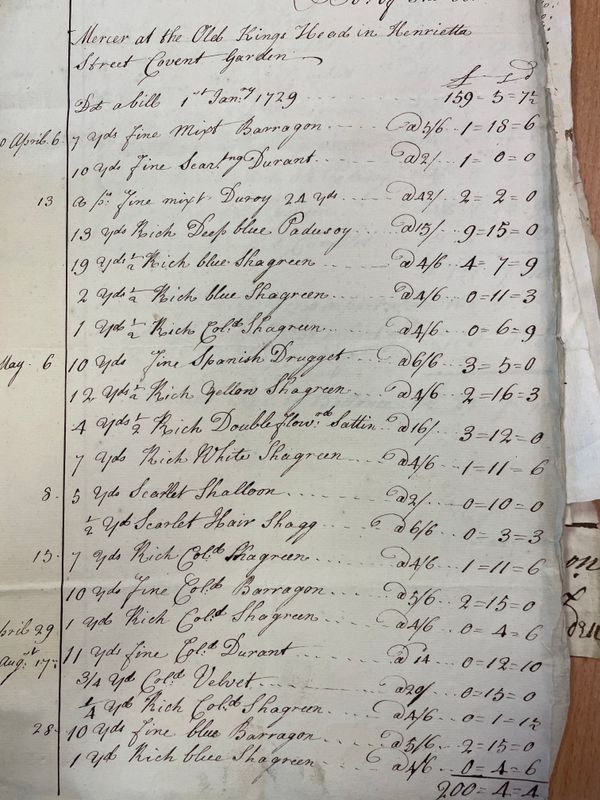
There were many orders for fabric from London merchants. I found the names of these fabrics interesting and quite different to the names we use today. One bill for a silk merchant, in Covent Garden, dating from 1729 lists amongst other things, 10 yards of fine seating durant, 13 yards of deep blue padusoy, 10 yards of fine Spanish drugget and 5 yards of scarlet shalloon.
So, what are all these textiles?
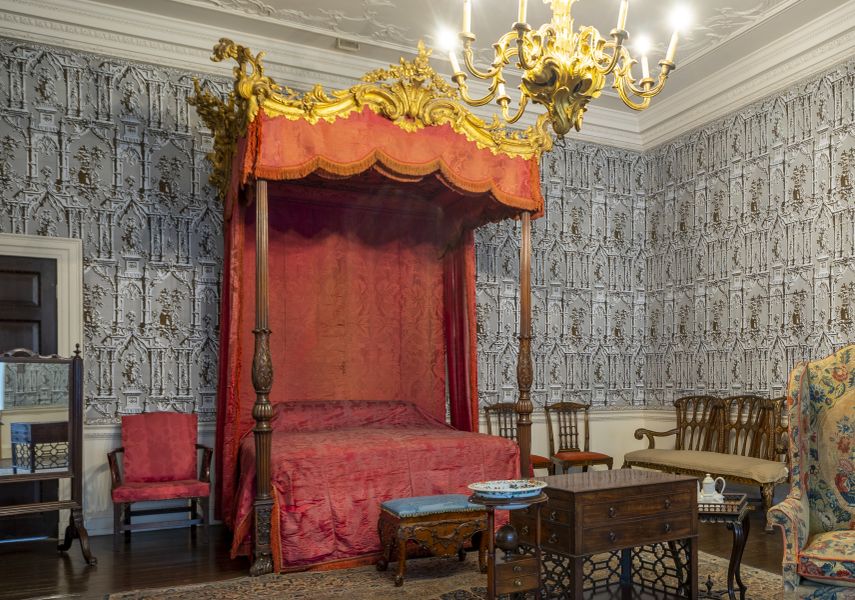
A durant is fine wool cloth with a glaze on it giving it a smooth feel.
This late 1700s bed can be found on display in the in the Gothick room at Temple Newsam. The bed hangings are a fancy red silk damask but they are lined with a glazed wool like a durant.
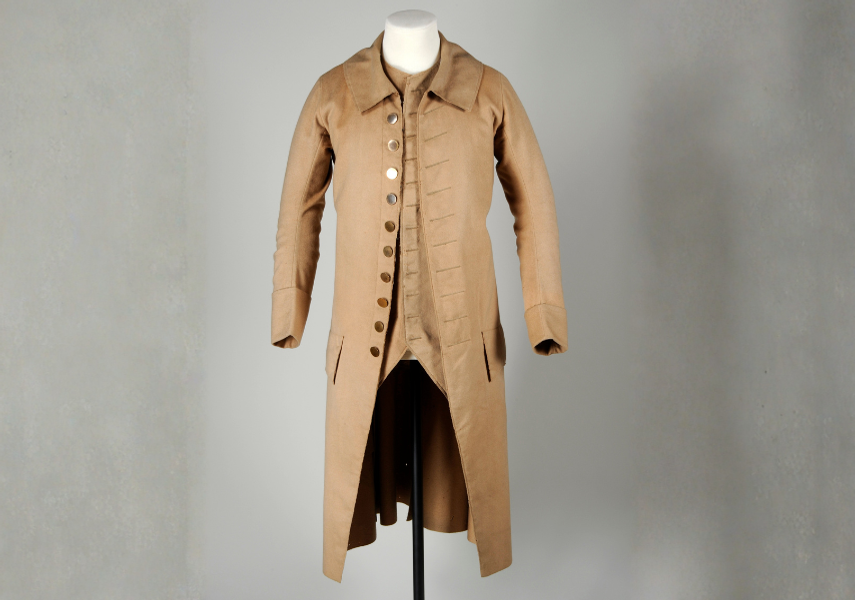
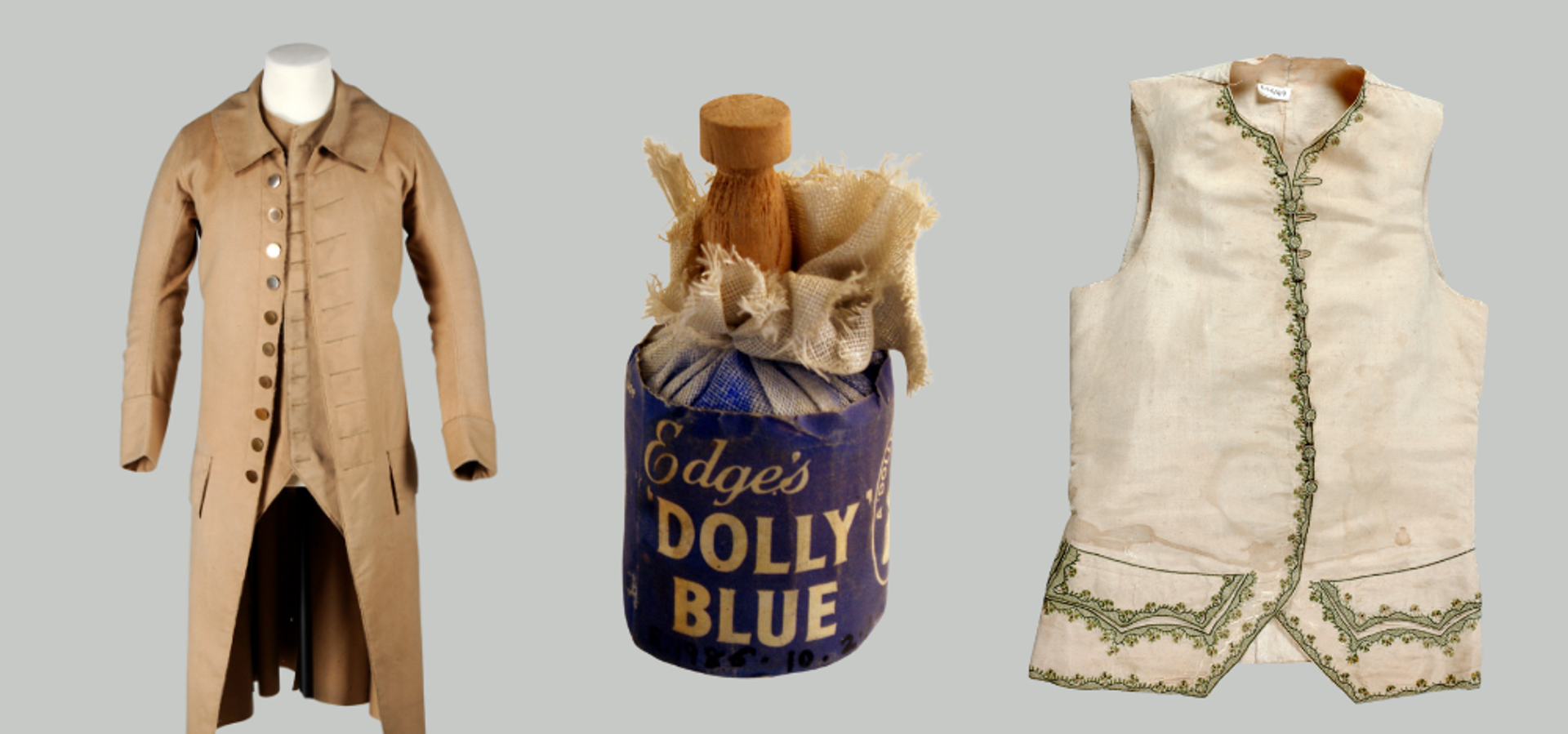
Shalloon was another wool fabric and like durant it was often used as a lining material. The Leeds Museums and Galleries collection of fashion has this suit from 1770s which has a shalloon lining in the coat as example.
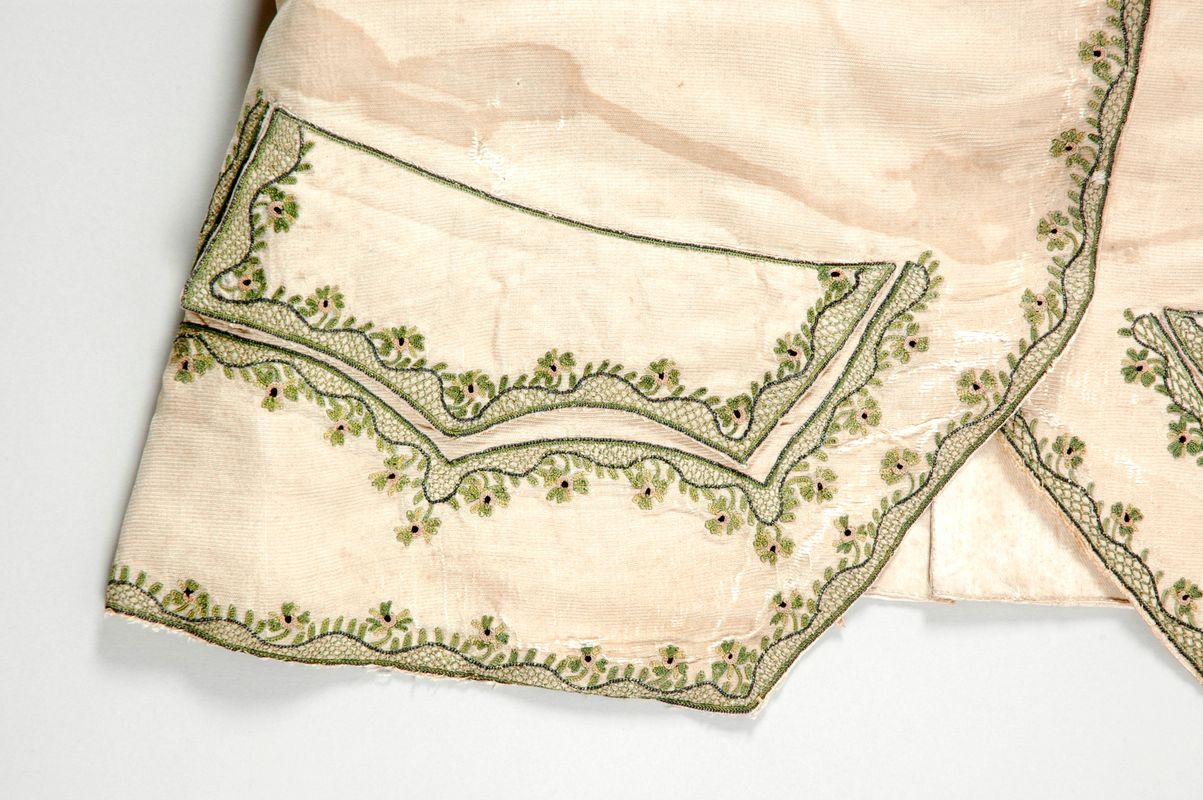
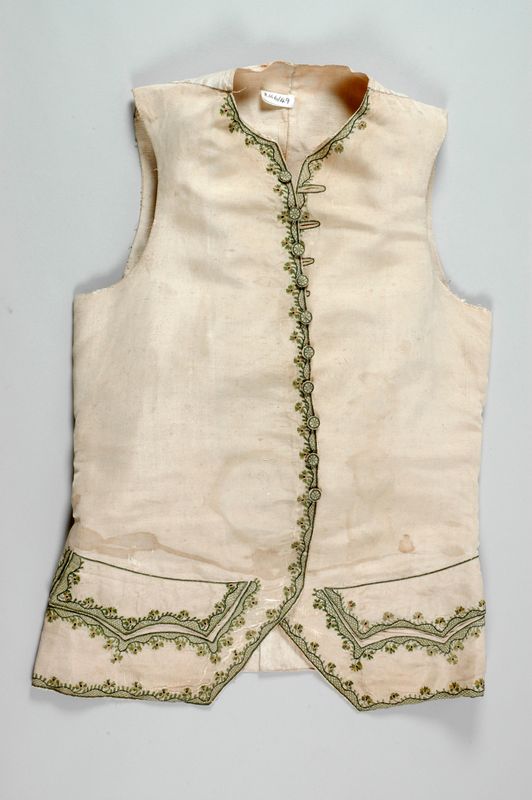
Padusoy also spelt Paduasoy is a luxurious silk fabric similar to satin but woven with a very fine ridge. It was used for both clothing and upholstery.
This waistcoat from the 1760s is from the Leeds Museums and Galleries collection. Made of a cream, ridged silk, possibly a Paduasoy, it's decorated with a hand embroidered design of flowers and leaves.
The textile project is ongoing, and we are still processing the information and piecing it together. For now, I thought I’d share my experience of the West Yorkshire Archives.
Find out more about West Yorkshire Archive Service Leeds.
By Dr. Uma Raja, Temple Newsam Archives and Textile Project Volunteer