The Temple Newsam Picture Gallery Suite - Part 2
This blog will focus on a collaborative project between Leeds Museums and Galleries and the University of Leeds, which examined the needlework upholstery of the Picture Gallery suite at Temple Newsam using microscopic technology. For background information regarding the Picture Gallery and the furniture suite, see part one.
The upholstery for the seating furniture in Picture Gallery at Temple Newsam was made using a technique called petit point needlework, consisting of countless thousands of small (petit) woollen stiches in a variety of colours into a canvas ground. This project has used a portable Jiusion Digital Microscope – commonly used to aid soldering in electronics factories – to magnify the needlework up to 1000 times, revealing the minute detail of this incredible work down to thread level. Figures 1 and 2 show some of the images taken by Dr Ruth Hughes, a Bioimaging Support Scientist, at the Bioimaging and Flow Cytometry Facility of the University. They reveal this enchanting suite of furniture as never seen before.


As well as possessing a certain beauty in their own right, these fascinating images really gives pause to thought in regards the incredible amount of skill and labour required to produce such work on this scale, each stitched completed by hand, every colour – and shade of that colour – chosen with a bigger picture in mind. The images reveal the mastery of techniques and materials employed, with changes in stitch direction used to create subtle boundaries on petals, for example. Elsewhere, on the daybed, French knots are used in one instance to depict sunflower seed.
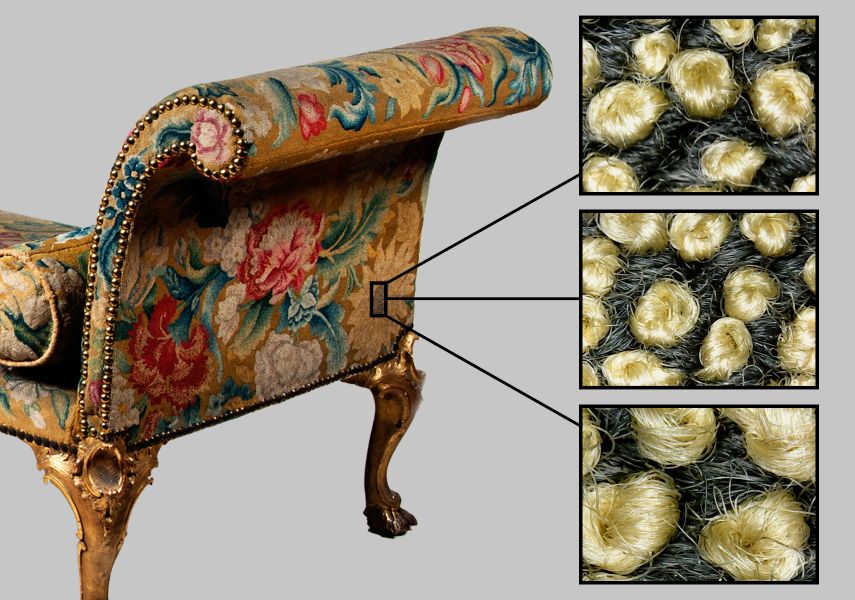
The centre of this sunflower on the day bed is unique amongst the suite, as the seeds have been depicted using French knots.
The level of detail and sheer volume of needlework also further highlights the immense wealth of the Ingram family. Even at a point in time where their finances were at a relatively low ebb, they were able to afford an extraordinary level of luxury which would have been far cry from most peoples’ experience.
Indeed, the cost of James Pascall’s work making the Gallery furniture, which excluded the needlework upholstery, was £376.17.00 (the final invoice was supplied by his widow, Ann, in 1747). In 2017 money that equates to roughly £44,000. This is a lot of money now (the median full-time salary in the UK in 2017 was £28,759), but in in 1750, this could purchase 55 horses or 3768 days of skilled labour. To add further context, average annual earnings in Britain in 1750 were £14.01.00.
Another fascinating insight Ruth’s investigations have provoked relates to the condition of the needlework. Despite the overall excellent condition of the suite, which suggests very litlle use, the images do seem to suggest the furniture has been used functionally to some degree, with degradation of fibres more apparent on the centres of seats and backs which would have come into more contact with the person seated than in other ‘less trafficked’ areas.
Perhaps more revealing, however, is the changes to the colours of the suite that this project has further highlighted. Unlike other materials used to decorate and furnish the Picture Gallery, such as gilding on the wooden elements of the furniture and the oil paint in the pictures, dyed wool, whilst relatively tough compared to other textiles such as silk, is still very sensitive to light. Even small amounts of light degrades woollen fibres, causing structural damage along with chemical changes in the dyes used to colour the wool. This is particularly true of the dyestuffs used here, which would have all been derived from natural sources, unlike many modern synthetic dyes which are more resilient. This has resulted in change to the colours – in everyday terms, fading.
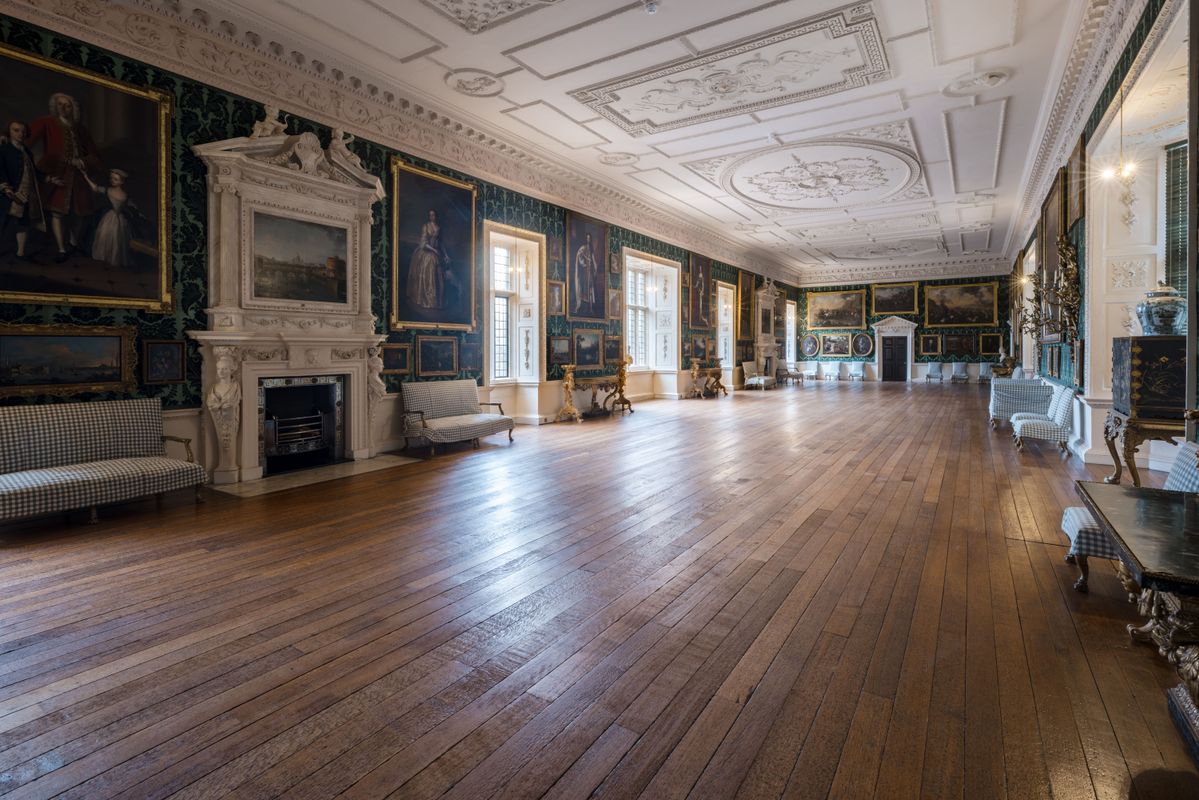
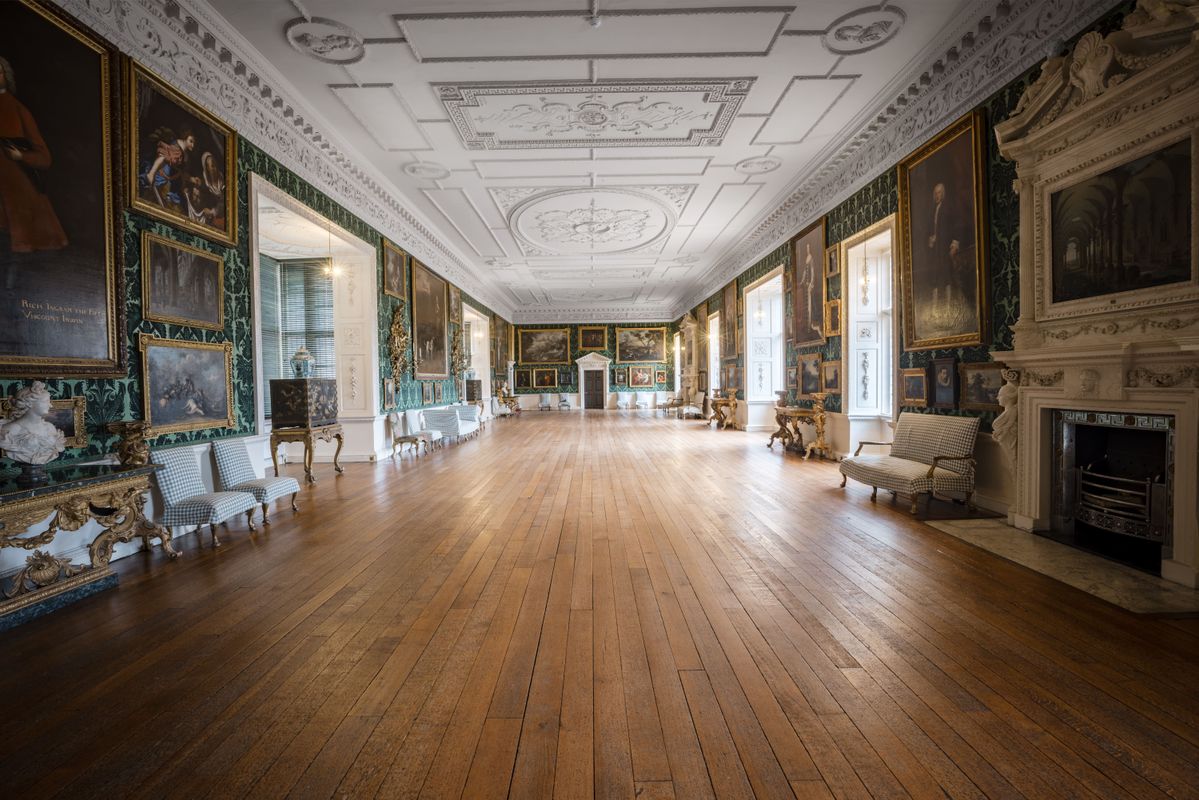
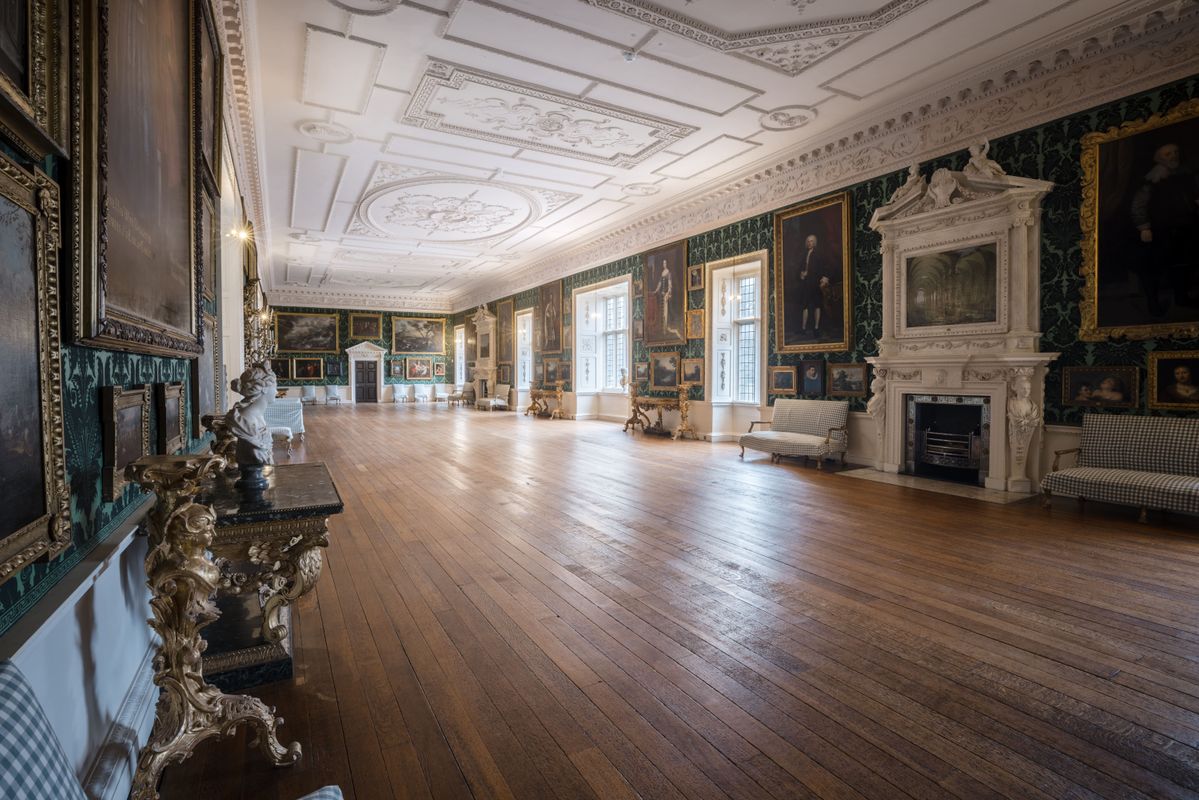
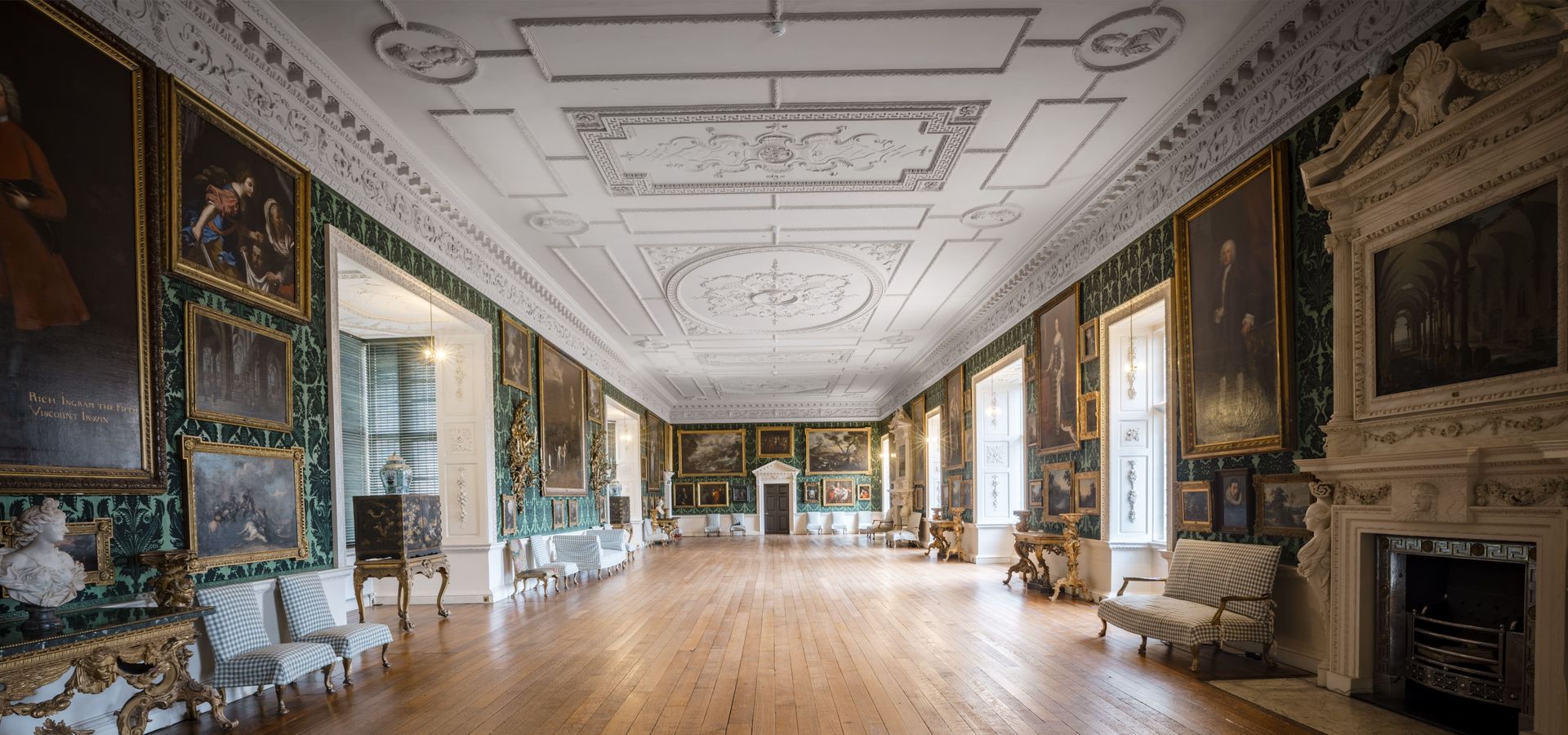
This fragility is the reason that for the vast majority of time we have to cover the textiles with loose covers, with only a single example visible at any one time. This something also done when Temple Newsam was still owned by the Ingram family – the 1808 inventory of the house records the suite was protected by ‘green check case covers’, which are replicated today. These loose-fitting dust covers would only have been removed for the most important visitors to the house.
Whether such diligence has always been shown is hard to say. Images of the Picture Gallery in the late 19th century, complete with customary Victorian clutter, show elements of the suite without covers, but this might have been just for the photographs, as tends to be the case today.
What can be said beyond doubt though is that, despite their excellent condition and the obvious care taken to preserve them, the textiles have faded considerably over the years. How do we know this though? This fact is most starkly demonstrated on the daybed. Beneath the two bolster cushions that sit in each corner are areas of needlework that have significantly more saturated and vivid colours than the adjacent areas. Clearly the bolster cushions have prevented light reaching the areas beneath, preserving what we assume are colours close to how they would have appeared in the 1740s.


What is obvious is that some colours are a great deal more fugitive than others, so the fading is far from uniform. It is also clear that for some colours, the changes to the dyes result in more than just a loss of intensity, and the nature of the colours themselves alters. This is most apparent in some areas of pink, which has turned into a sort of olive green. The light and dark greens are too quite different and are perhaps particularly important colours to consider in the context of their relationship to the dark green flock wallpaper in the gallery (today you see a modern replica, so relatively unfaded).
All this research – and the unfaded parts of the daybed – make apparent that the suite would have been far more vivid in the 1740s, with colours popping out very much like a glorious summer border of flowers. Nevertheless, given the non-uniform nature of this described previously, this is quite hard to imagine. To help us better understand the intended visual qualities of the needlework, we therefore employed photo editor, Oliver Bowett, to use Ruth’s data to digitally recolour a chair from the suite.
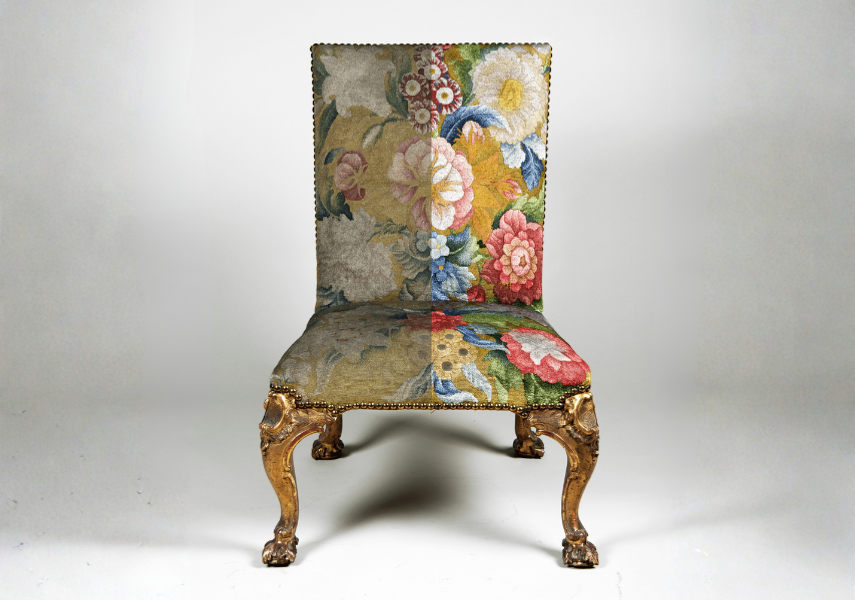
Whilst it would be a simple task using modern photo editing software to uniformly increase the saturation and/or brightness of all the colours – and indeed photographs can be quite misleading in this respect, where the reality can be somewhat more subdued than the photo – processing each separate colour to correspond to the average colours Ruth has calculated is a far more onerous task. This requires each colour to be isolated and processed individually. However, by doing exactly this, Oliver has created a far more authentic vision of the colours that would have greeted Henry and Anne Ingram.
If the Picture Gallery stops one in their tracks now, just imagine it then!
This project is a result of the Cultural Institute of the University and Leeds and Leeds Museum and Galleries Cross-Disciplinary Innovation Fund. Enormous thanks to Dr Ruth Hughes for all her time, skill and expertise expended on this project.
By Adam Toole, Curator of Decorative Art
2021