
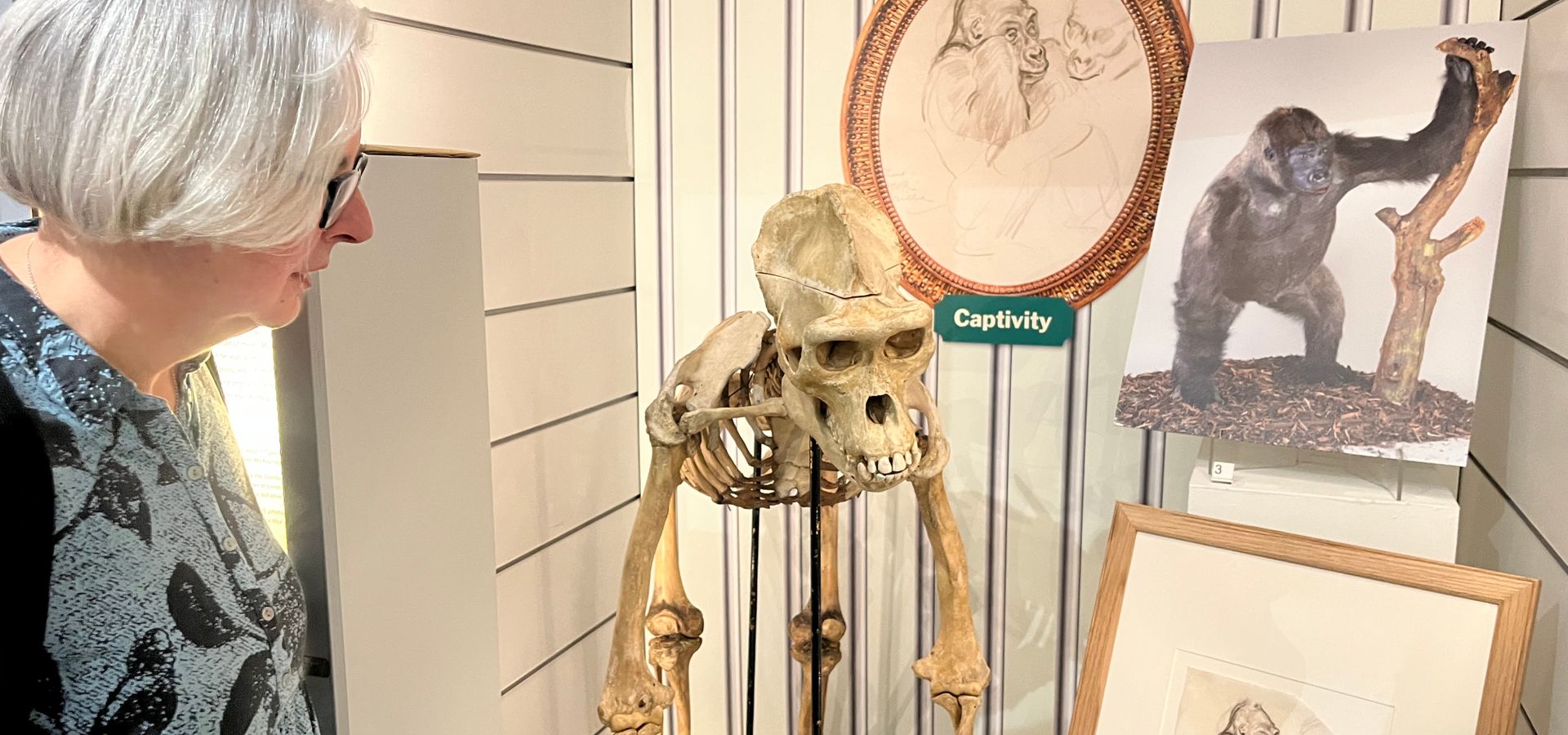
The Diet of Mok the Gorilla
“…ill-adapted as he was to such unaccustomed form of nutriment, to what degree, if any, was Mok’s sad end due to his weekly intake of beef steak and chicken…”
-Frank Wyatt, Secretary of the London Vegetarian Society, 1938
When Mok the Gorilla passed away on 14th January 1938 after a three month-long illness that resulted in mouth ulcers, lethargy, and weight loss, it caused great upset to both London Zoo staff and visitors. Countless people contacted the zoo with suggestions of how to help, including women sharing home remedies that had worked for their children. Following an autopsy, his cause of death was publicly announced to be a pneumococcal infection. However, the actual findings of the autopsy determined that Mok’s death had been the result of Parenchymatous Nephritis (Bright’s disease), inflammation of the kidneys affecting the heart.
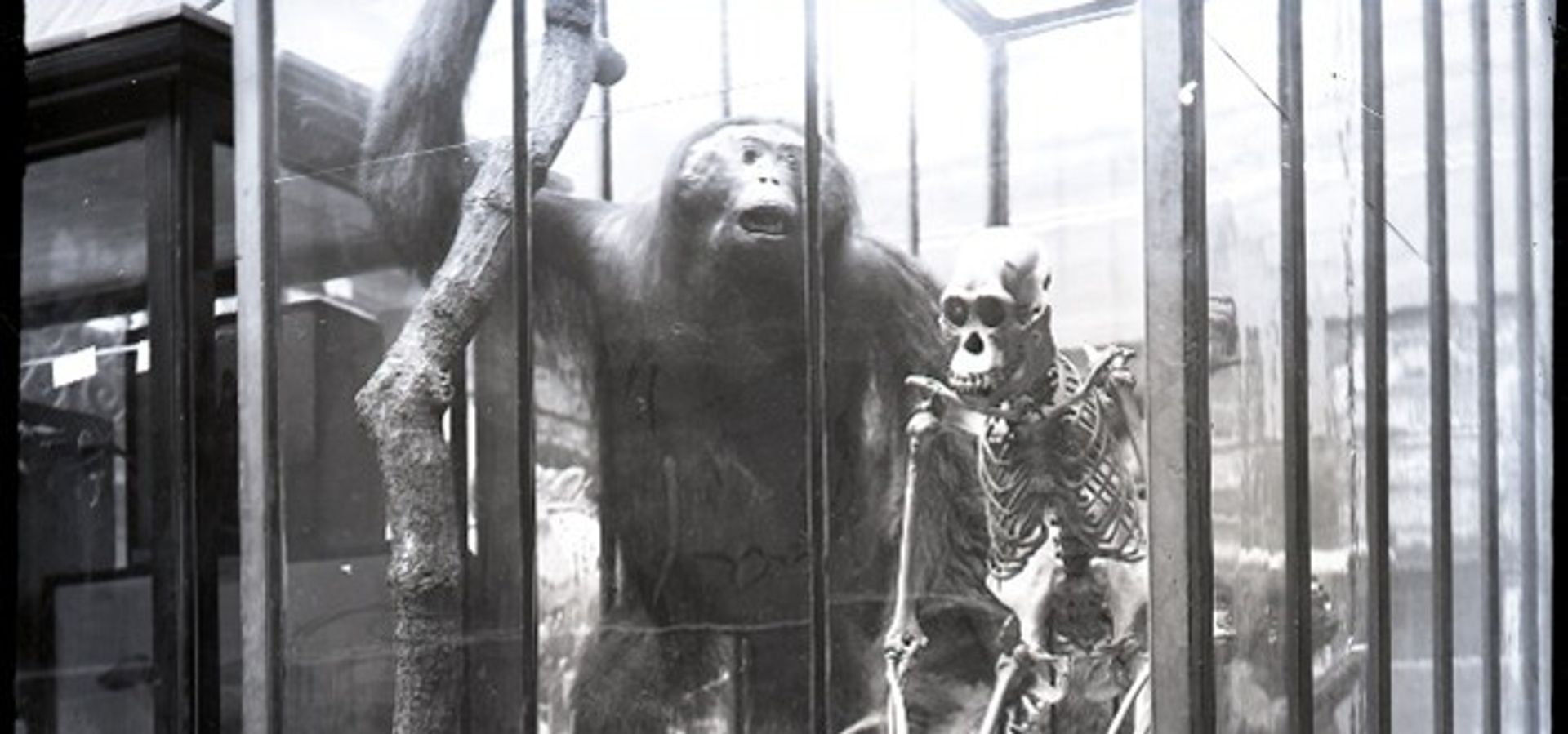
Mok’s premature death at the age of 7 years raised suspicions about his care. In a letter to a 1938 newspaper, Frank Wyatt of the London Vegetarian Society raised the issue of Mok’s meat consumption. He noted that human patients with Bright’s disease were “forbidden to take flesh foods” and that there were similarities between human and giant ape anatomy. The letter concludes that if Mok had been kept on a vegetarian diet, he would have lived to the expected age of 40-50 years old.
It is easy to assume that 1930s zookeepers did not understand what to feed a gorilla, but it was already known that they were herbivores. While Mok was being fed boiled chicken and having biscuits with milk before bed, a gorilla named Alfred at Bristol Zoo was kept on an almost entirely vegetarian diet. When Mok died, Alfred became the oldest gorilla to survive in captivity (though he would ultimately die at the age of 20). London Zoo should have been aware of the recommended diet, so why did they ignore it? The answer may lie in Mok’s history before he came to the zoo.
Mok was acquired by French colonial administrator Jean Charles Andre Capagorry in what is now the Democratic Republic of the Congo in 1930 and kept with an older female gorilla named Moina. In the summer of 1932, the Cappagorrys brought Mok and Moina to France, and soon after they were sold to the Zoological Society of London. London Zoo had a bad record of keeping captive gorillas, most of who died prematurely.
However, they were keen to try again with a possible breeding pair. Mok and Moina were supposedly aged 7 and 9, though their low weights indicate they were probably younger. Mok may have been only about 3 years old.
With the Capagorry family, Mok and Moina ate fish, eggs, grapes, and bread with butter, as well as vegetables. They drank milk from teapots and were even said to use cutlery at table. The zoo seems to have prioritised continuity over nutritional recommendations. This made them more vulnerable to ailments. The change in climate also affected them, particularly the difference in sun levels between England and Congo. Despite a new enclosure constructed with electric lamps and air filters, Mok suffered several bouts of pneumonia before the illness that ultimately caused his death.
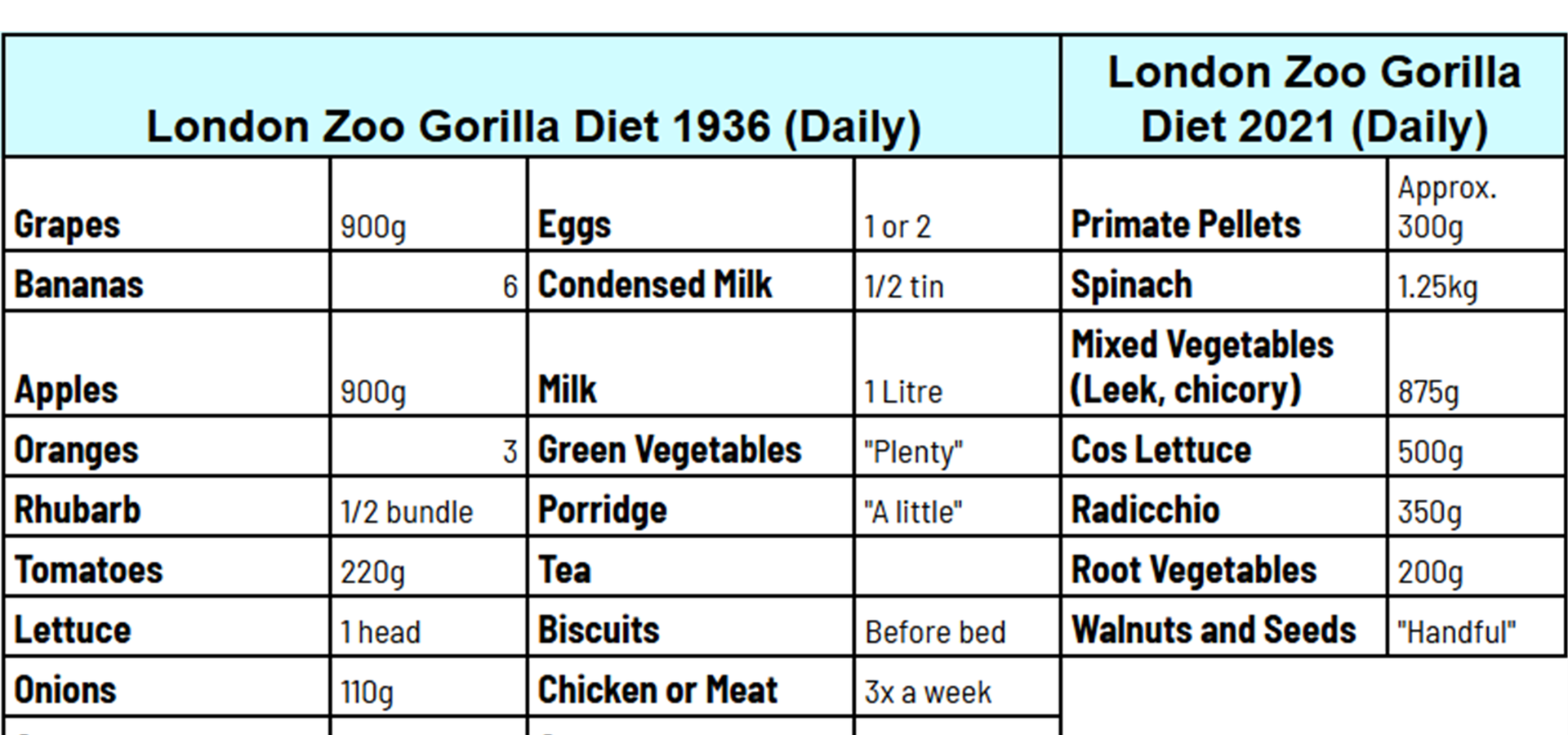
This table compares Mok’s diet with a modern zoo diet. As well as no longer offering processed food, meat or sweet tea, the modern diet also cuts out fruit with high sugar and includes specially formulated with all the necessary vitamins and minerals to help them thrive. Instead of tea sets and cutlery, feedings take the form of ‘scattering’, which encourages natural foraging behaviours and provides enrichment.
Was Frank Wyatt correct to say that a meat-free diet would have helped Mok live longer? It is hard to believe that Mok’s poor diet had no impact on his health. While advances in animal care put the practices of 90 years ago to shame, the choices made by the zoo when it came to Mok’s diet were already outdated, which only exacerbated the negative effects of his treatment as a pet.
By Katy Marchant, Collections Placement