
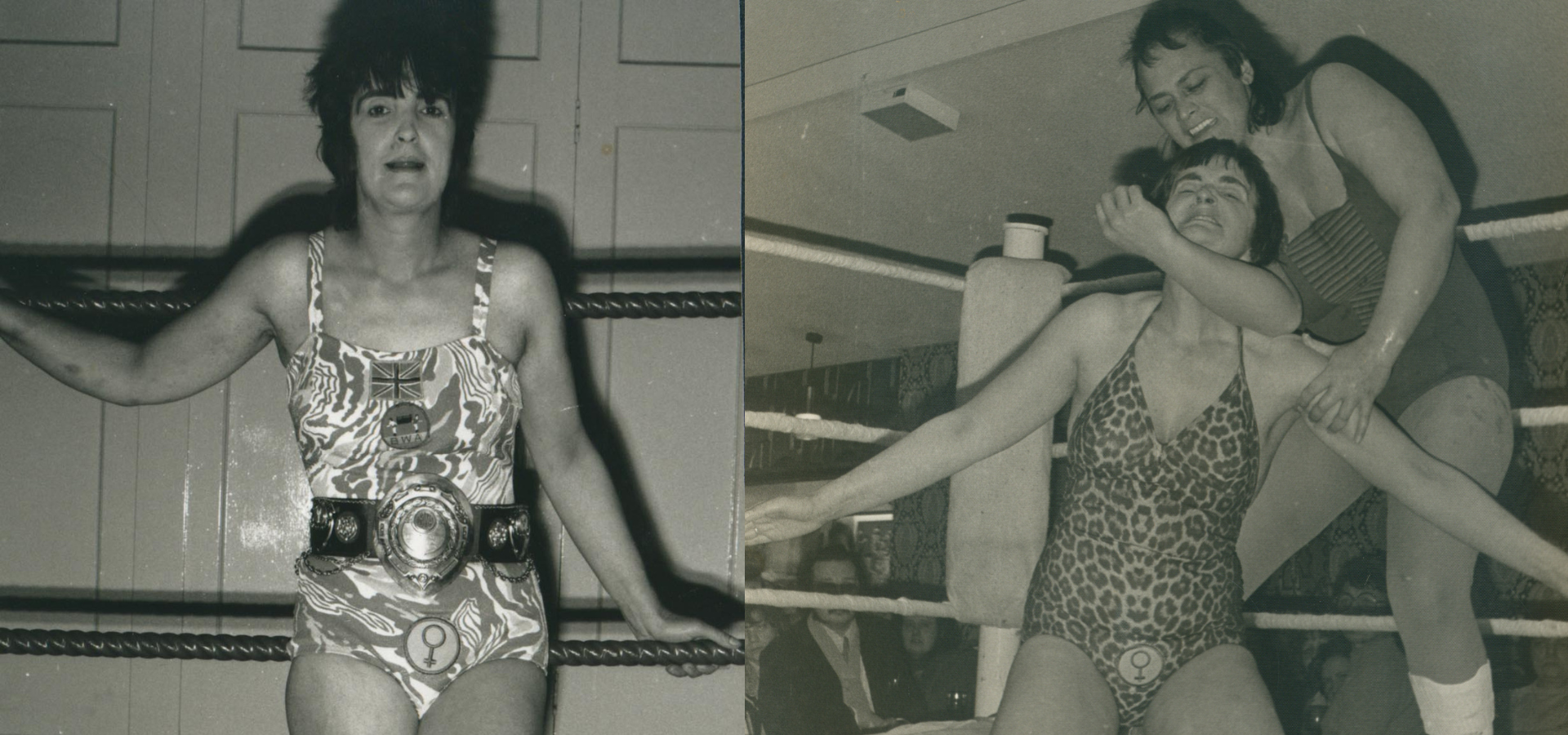
Sue Brittain - The fight for women’s right to wrestle.
Featured in In The Picture: Objects in Focus exhibition at Abbey House Museum
“She fought for women’s rights; she was the Emmeline Pankhurst of wrestling.”
-Al “Armour-Plated” Marshall
The History of Women's Wrestling
Women’s wrestling first came to Britain from Germany around 1867 as a sideshow performance and worked its way into theatre halls and fairs across the country. Not everyone approved. Newspapers described public women’s wrestling matches as “deplorable” and “intolerable” and there were protests in some cities. Other matches were praised for their sportsmanlike conduct and young, slim competitors.
A women’s mud wrestling match at the Devonshire Sports Club in Hackney in 1938 proved too much for public opinion though it’s important to consider the wider context of wrestling during the era. The sport was criticised for its “anything goes” approach to rules that often led to violence and over-the-top spectacle. As a result, men’s and women’s professional wrestling matches were banned by London County Council at the end of the 1930s. Other local authorities quickly followed suit.
The ban on men’s wrestling was overturned in 1952 with a new code of conduct, but the ban on women’s wrestling remained. Women’s wrestling was relegated to displays in private clubs. In 1972, Wrestling Revue Magazine estimated that there were only 12 female professional wrestlers in the country.
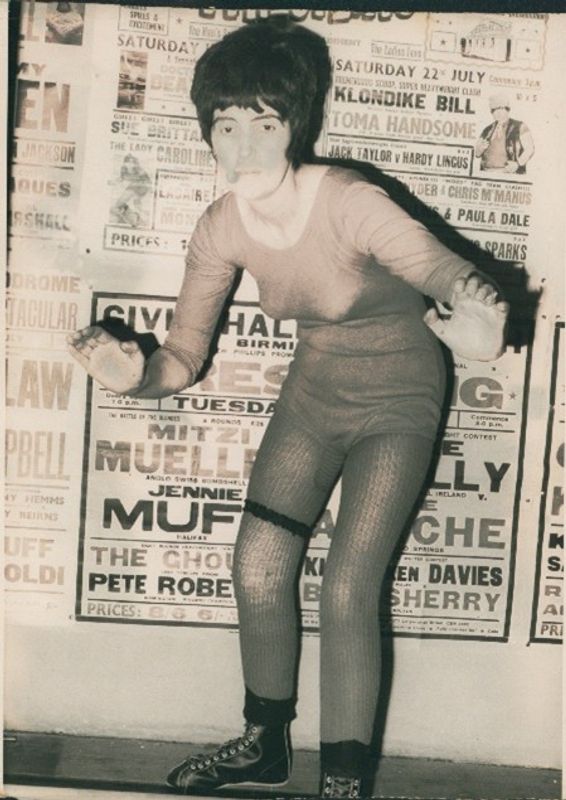
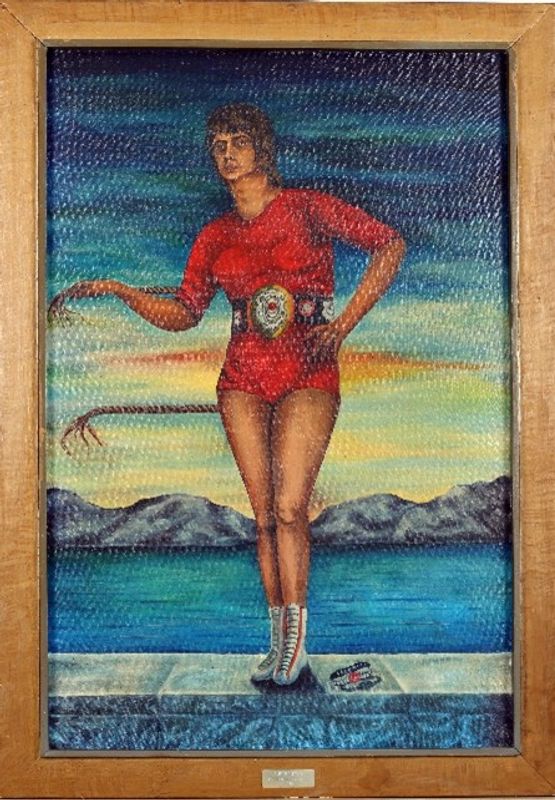
Enter the British Wrestling Alliance
Established in the early 1970s, the British Wrestling Alliance found a niche in women’s wrestling events. Leeds-based Ace Sporting Promotions ran events in the north while Verdun-Leslie Promotions promoted events around London. 1960s feminism had revived interest in female wrestling and built an audience excited to see something that had become almost taboo. However, there were still byelaws that banned them, especially in London.
In 1977, BWA Champion Sue Brittain had been booked for a match at the Manor Baths in Southwark which was halted by the local council. Brittain took them to court for sexual discrimination supported by her husband Ron Farrar, Director of Ace Sporting Promotions. They argued that the Greater London Council (GLC) byelaw went against the 1975 Sexual Discrimination Act. The Equal Opportunities Commission agreed and asked the GLC to drop the ban. A GLC vote in February 1978 upheld the ban by 36 votes to 29. The council argued that the Act did not apply to the byelaw, which was itself an Act of Parliament, and thus could not be used to challenge it.
Undeterred, Brittain challenged the ruling and in June 1979 an industrial tribunal ruled that the byelaw banning women’s professional wrestling matches in London should be lifted.
Just two months later, on 23rd August 1979 Sue Brittain defended her BWA Champion title against Jane St John at Wimbledon Town Hall.
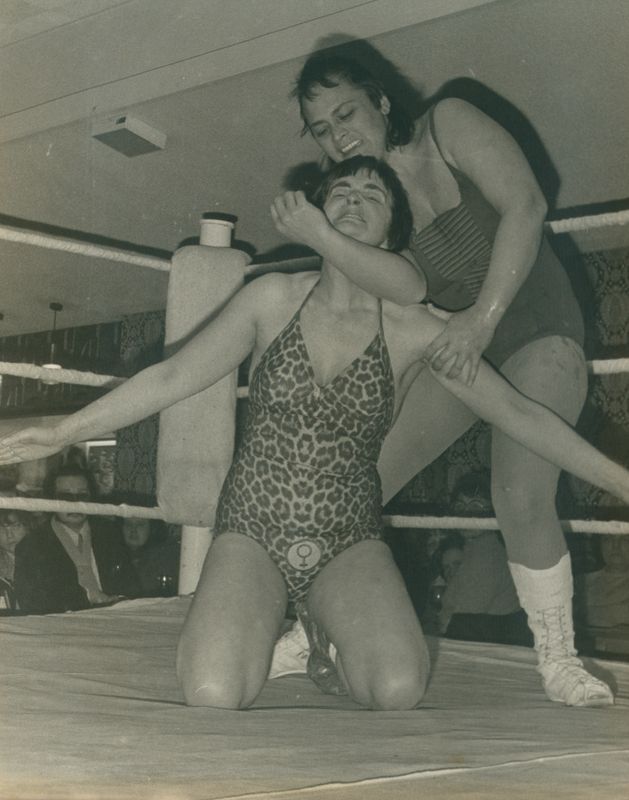
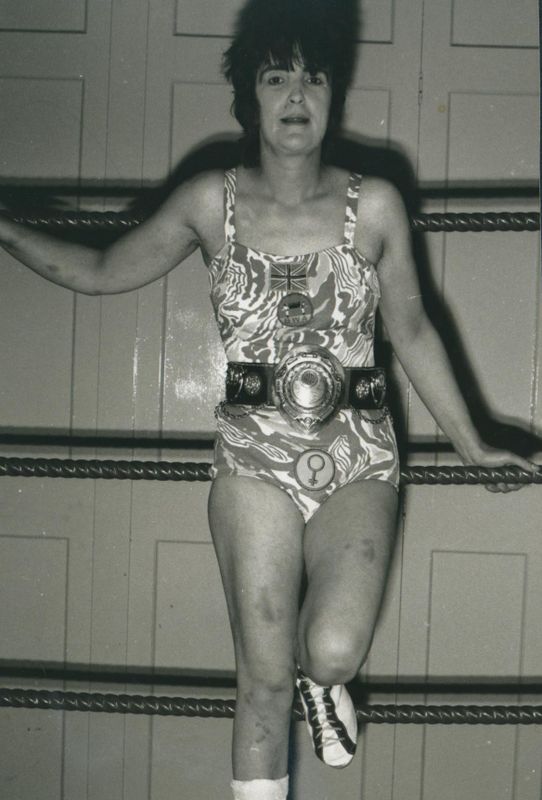
This was not the watershed moment that Brittain and Verdun-Leslie productions had hoped for. The GLC appealed against the ruling to the House of Lords, and the ban was reinstated. The ban was not lifted until 1987.
Sue Brittain continued her career with the British Wrestling Alliance in more wrestling-friendly towns and held the BWA Champion title for all but ten days between 1970 and her retirement 1982. She typically played the role of a villain during matches, somebody that audiences loved to hate, and was considered a huge draw for audiences. Following her official retirement, Brittain continued to have a presence in British women’s wrestling as the masked Lady Satan.
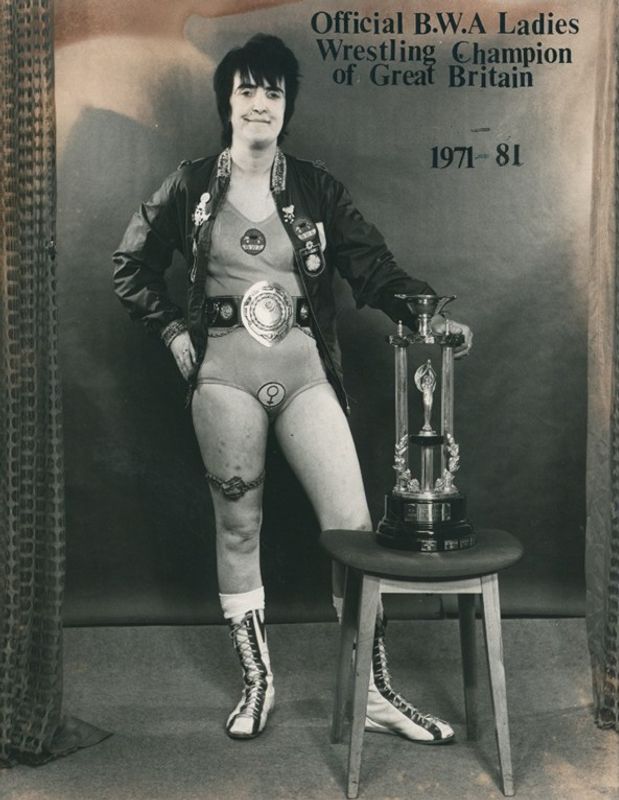
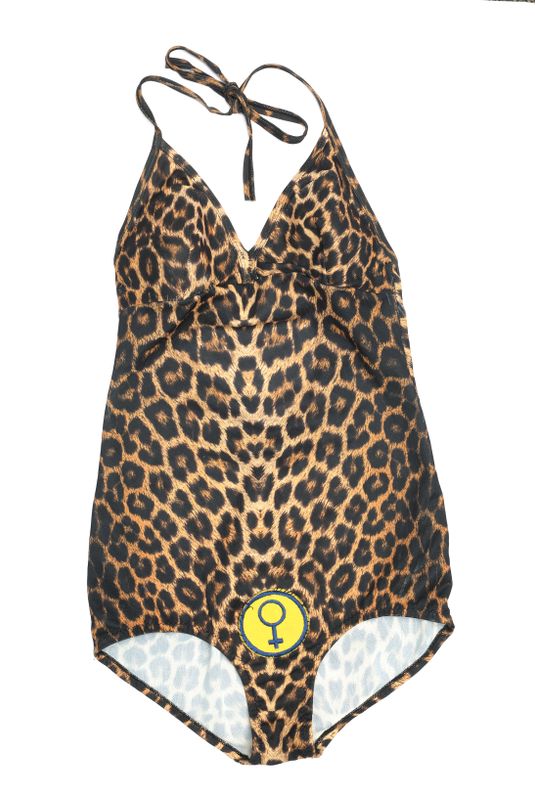
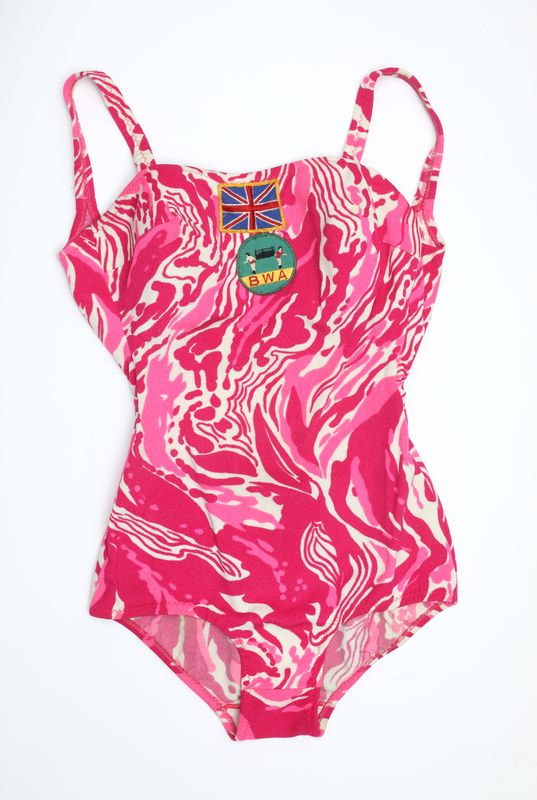
When her career began almost by accident in 1970 after she stepped up to fight Maria Rivoldi in a pair of borrowed boots after Rivoldi’s opponent failed to show, it’s unlikely that Brittain – whose real name was Marjorie Farrar – expected to have as much of an impact as she did. However, she cemented her legacy both through her impressive displays in the ring and her commitment to challenging the sexist attitudes of local councils across the country. Her reputation went beyond the UK, and she received invitations to wrestle in Europe and the USA. However, she turned these down to spend more time with her family.
While it may still be somewhat of a niche sport, British wrestlers have found fame worldwide. Without the efforts of pioneers like Sue Brittain the opportunity would not have been there for the sport to grow, or for new generations to find ways to participate.
By Katy Marchant, Collections Placement for In The Picture: Objects in Focus
Discover some of the Sue Brittain collection in In the Picture: Objects in Focus at Abbey House Museum.