
Mitzi Cunliffe’s Root Bodied Forth and the Missing Art of the Festival of Britain
“Used, rained on, leaned against, taken for granted.”
-Mitzi Cunliffe
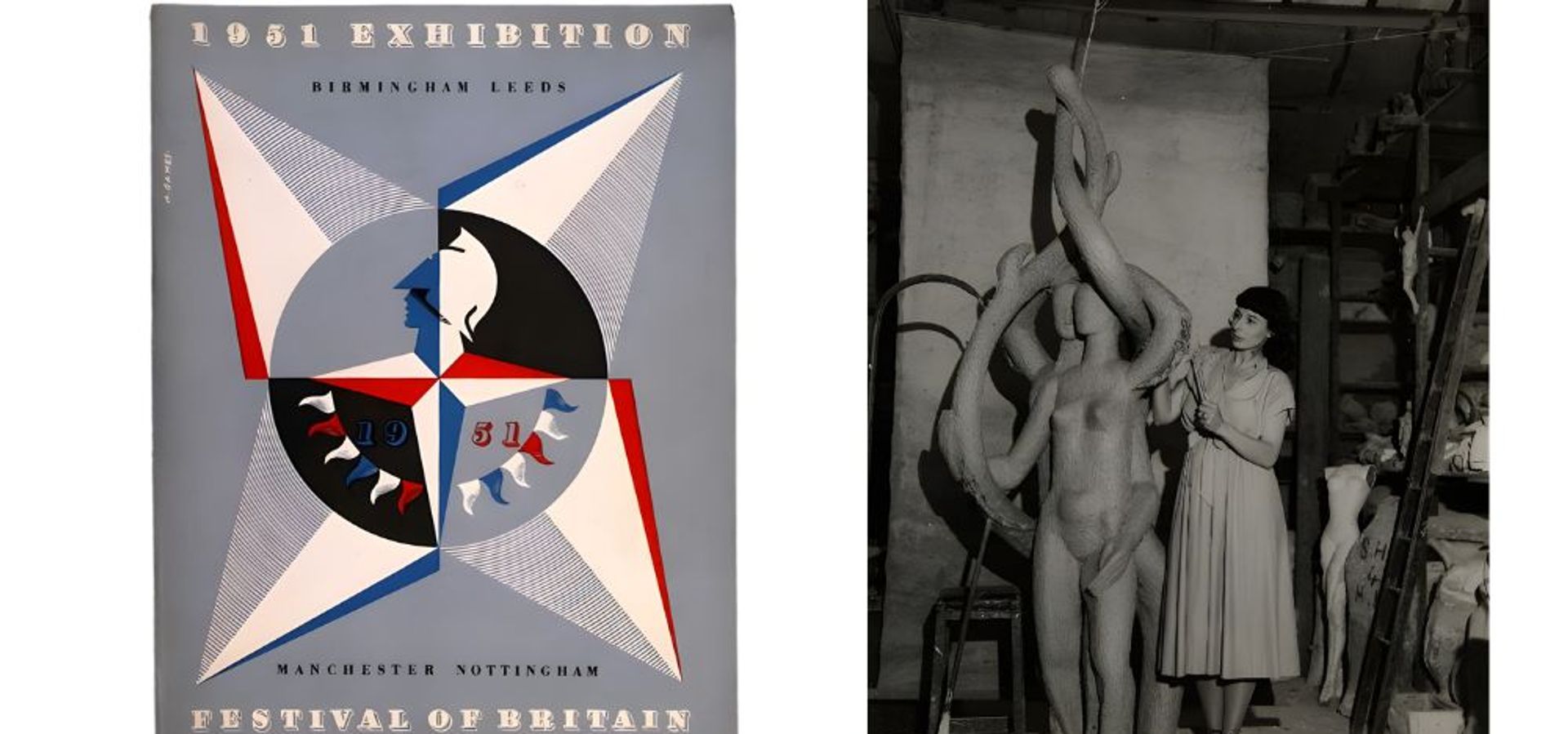
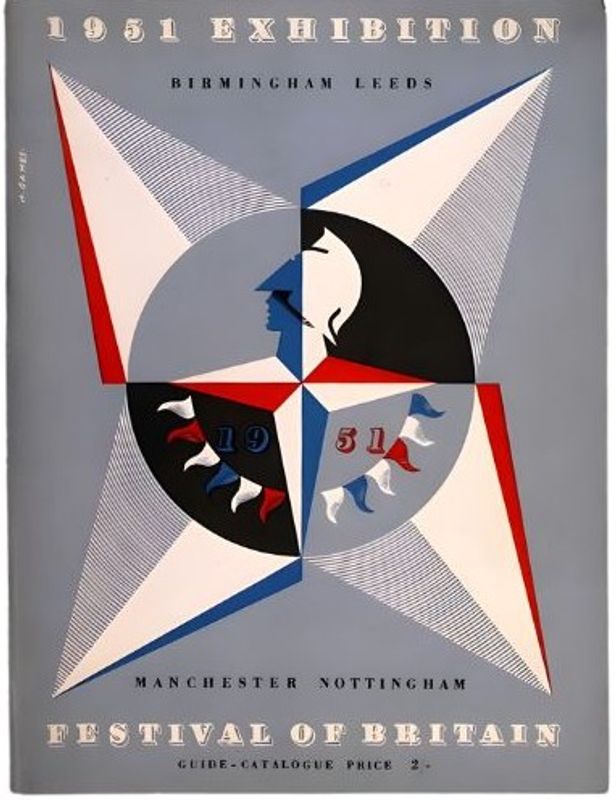
100 years after the first Great Exhibition was held in London’s Hyde Park, the Festival of Britain was organised for the summer of 1951, taking place primarily on the South Bank of the river Thames with satellite events across the country. Unlike the global and industrial focus of the Crystal Palace, the Festival of Britain was intended to be a showcase of the tenacity of British art in the aftermath of a war which had left the country reeling, the effects of which could still be seen throughout the UK. Hope for the future and the pursuit of innovation were key themes, and one way in which the festival pursued these was through the commission and display of new works of public art. Exhibiting a more modernist, brutalist-leaning style which would come to define British public art and architecture in the mid-20th century, the works curated by the festival utilised materials such as concrete and steel to symbolise rebuilding and progress.
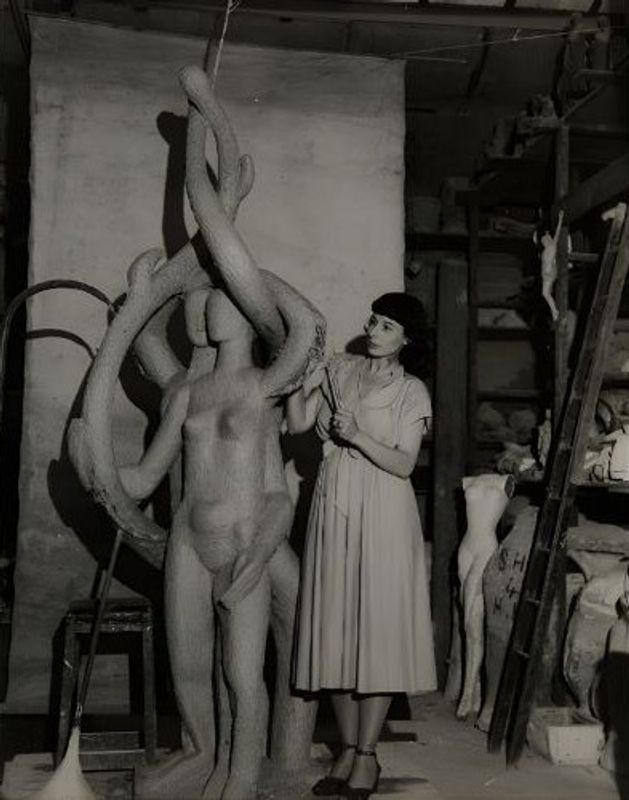
One such work was Root Bodied Forth, created by UK-based American sculptor Mitzi Cunliffe. Depicting two figures growing and intertwining like inoculating trees, the sculpture stood on the South Bank at approximately 8ft tall – by no means the most imposing, but with an eye-catching humanness that made it stand out among the others. Barely distinguishable in their features from trees, the sculpture was made of a terracotta concrete carved with a bark-like texture and was most likely painted in a shade of dusky pink. In the black and white photos taken at the event, it is impossible to discern the exact colour. Unfortunately, it is also impossible to judge from the sculpture itself, as it has been missing since the event. All that is known to survive is the maquette, a small sculptor’s model cast in bronze, which was kept by the Cunliffe family.
Root Bodied Forth is not the only piece of art which hasn’t been seen since the Festival of Britain. Designed as a temporary exhibition, the sculptures that lined the South Bank were never intended to stay there forever. The fates of many of these sculptures, whether it be auction, theft, destruction, or scrapping, remains unknown to this day. Of the 30 sculptures that lined the South Bank, less than half are known to have survived. The success of the Conservative party in the October 1951 general election may have expedited the clearing of the statues at the end of the Festival of Britain, a Labour government endeavour. The artworks on display were described by some as grotesque, embodying a novel form of British socialism which was the subject of criticism by Winston Churchill.
Some pieces, such as Arthur Fleischmann’s Miranda, were kept only to have been stolen or vandalised in the decades that followed. The 2.5m long bronze sculpture, originally part of a fountain, was inexplicably stolen in Leamington Spa in 2001. Others are lost to time, if not lost in the sense of being unknown – the landmark Skylon construction was deemed not worth the then £30,000 (over £750,000 today) it would have cost to move it, particularly in the context of ongoing postwar austerity, and thus it was sold to be scrapped with only the base remaining in the collection of the Museum of London (although theories have been proposed about it having been thrown in the Thames or buried under Jubilee Gardens).
In 2016, Historic England put out a call to the public for help in locating a number of postwar British artworks known to be lost, including several that were created for the Festival of Britain. It was not an unsuccessful campaign – just a year later, Peter Laszlo Peri’s The Sunbathers was rediscovered in the garden of a hotel in Blackheath, London, after a couple recognised it from an image in an exhibition at Somerset House arranged by Historic England. A figure of £15,000 was put on its restoration in terms of donations sought from the public, with more money funded by Historic England themselves. The work required was extensive, including drying the wet concrete, removing peeling paint, re-shaping the wire frame, and replacing missing parts from where it had been climbed on by children throughout its decades as a hotel garden ornament. As of 2020 the sculpture, which had caught the attention of Welsh poet Dylan Thomas during the 1951 festival, is back on display in Waterloo Station.
Will Root Bodied Forth be one of the sculptures from the Festival of Britain to be rediscovered? It is impossible to say. The restoration of works such as The Sunbathers certainly casts the endeavour in a positive light, but there are external factors which make the question difficult to answer. Assuming it was not destroyed and has instead been lurking as a garden ornament for 60 years, environmental factors such as rain may have damaged it beyond repair. There is also the factor that, at the time of the exhibition, Mitzi Cunliffe was not a household name. Even today, next to contemporaries Barbara Hepworth, Henry Moore, and Anthony Gormley, she is still a lesser-known name, even if her works can be found on display throughout the UK, particularly in her home city of Manchester. As a result, finding her work has historically been less of a priority, and the crucial window of opportunity may have been missed as a result.
Today, Mitzi Cunliffe’s most visible legacy can be found in the hands of actors and creatives every year at the BAFTAs – the golden theatrical mask trophy was her design. Will this bring more attention to her missing works and those of others from the Festival of Britain?
By Katy Marchant, Collections Placement