
John Grimshaw Wilkinson, the Blind Botanist of Leeds
I have been involved in volunteering with the Dead Plant Society, which is a project by Leeds Museums and Galleries partnered with Space2, to search through and do research on the herbarium sheet collections at Leeds Discovery Centre. The collection, which is 250,000 sheets strong, are not displayed very often due to their fragility and inaccessibility, so their efforts are incredibly valuable to ensure the information can reach people. I have not had the time to attend one of the groups, which are on Wednesdays 10-12, but I instead go weekly to work on the database side of things alongside a few other volunteers. Using the Museum System and a spreadsheet of information collated by the Society, I create records for the herbarium sheets in the collection. Where necessary, we also go down to the sheets themselves in the storeroom to take missing pictures and make corrections.
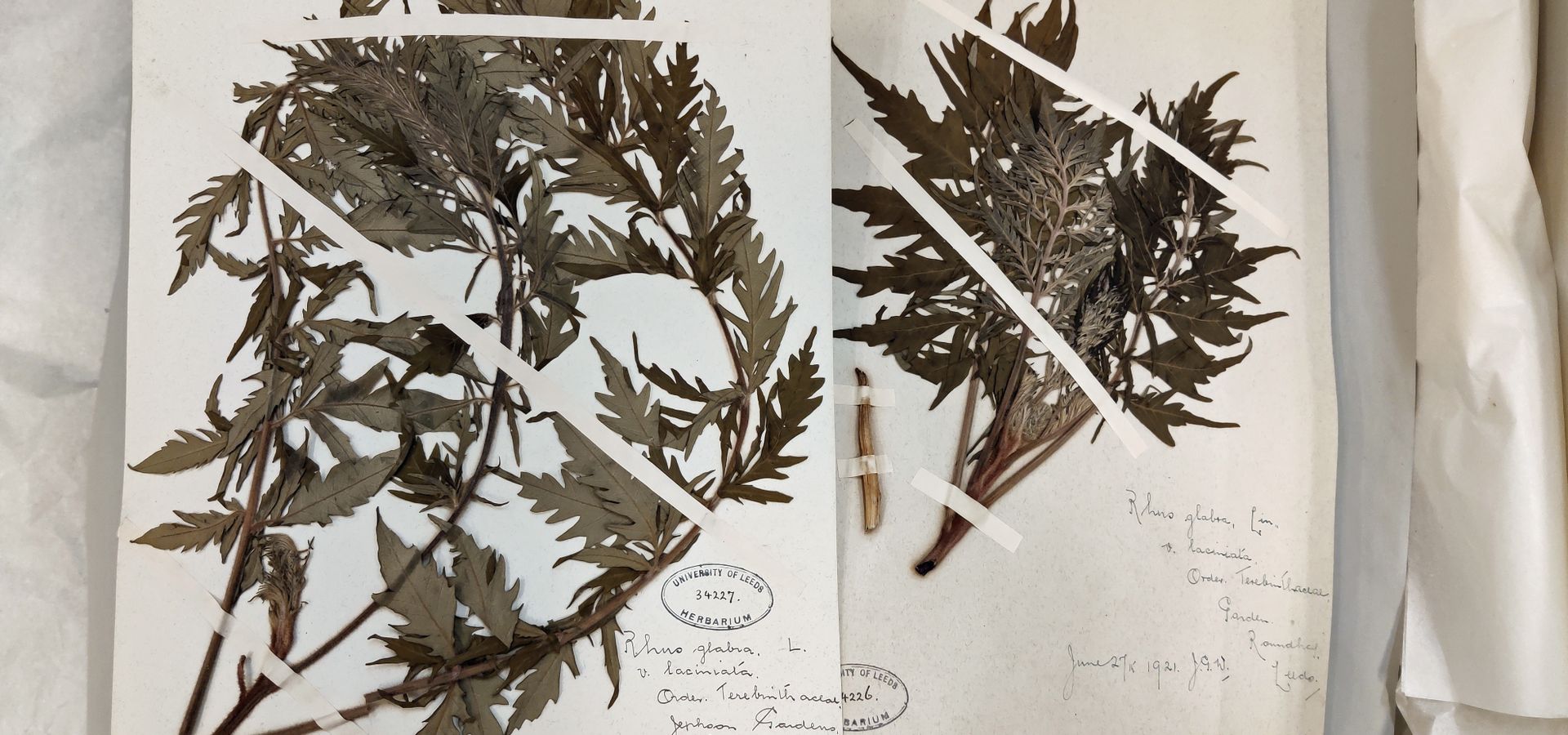
The herbarium sheets we are currently working on were created by a botanist called John Grimshaw Wilkinson, a blind botanist from Leeds whose collection was transferred into the care of Leeds City Museum in 1982. His sheets depict many rare and extinct plants collected by himself and others from gardens all around the country, as well as a few hailing from other countries. The picture below is of a Winter Savoury (Satureja montana) that was collected from Shakespeare’s garden in Stratford-Upon-Avon.
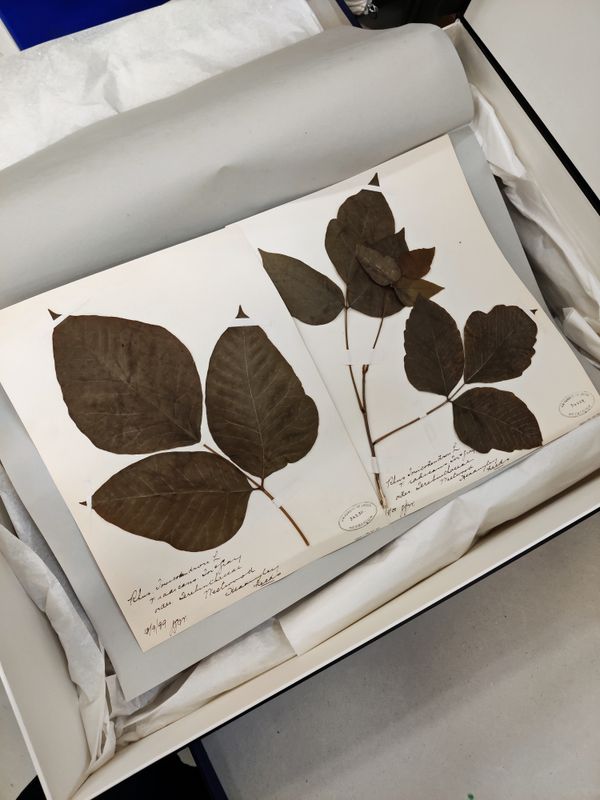
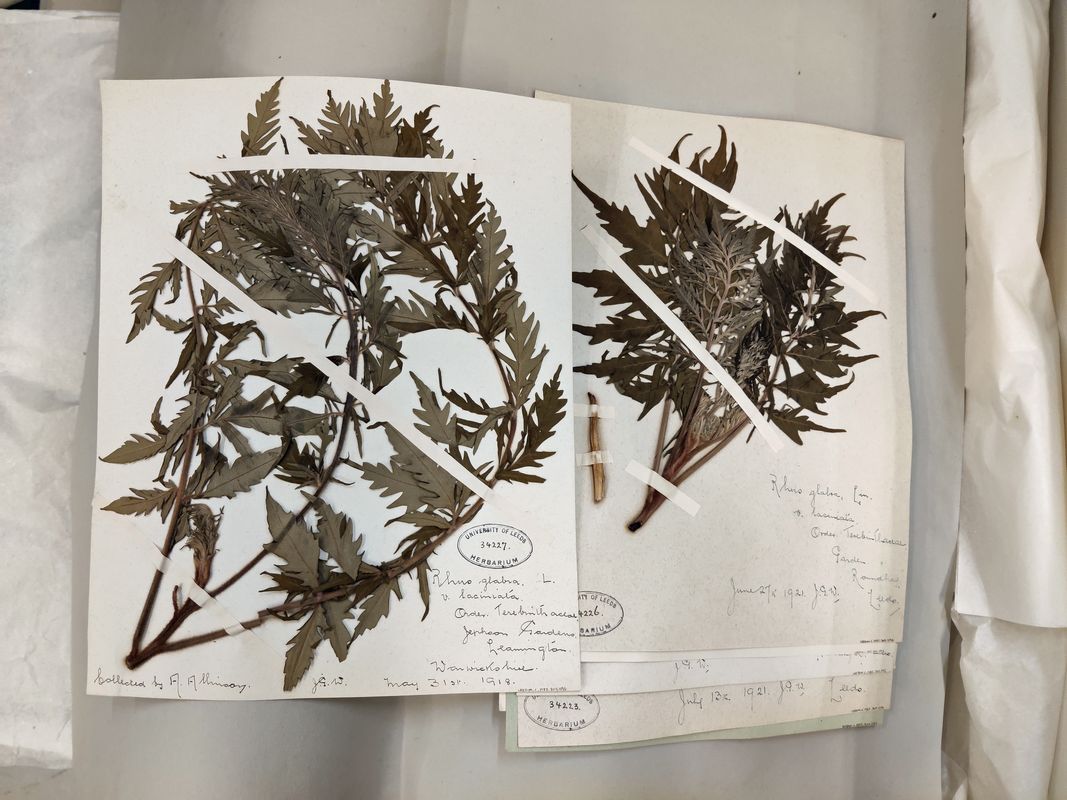
I had heard a few details about him while I was volunteering, but not enough to match my growing curiosity. Preservative Party meetings, a group of 14–24-year-olds curating exhibitions at Leeds City Museum, was currently in a quiet phase in between projects, which gave me the space to sate my interest.
About John Wilkinson Grimshaw
John was born in 1856 and worked as a grocer for the first quarter of his life, indulging in painting as a hobby. At the age of 22 he lost his eyesight to a bout of rheumatic fever. I will never be able to fully appreciate the difficulties of having to live without the ability to see, let alone having to adjust to not being able to do so after a childhood where I could. Eventually, he realised he could determine the type of tree he was under by the sound of the raindrops above him and touching the bark, inspiring him to develop his other senses to perceive the world around him. He started studying botany, using his touch, taste, and smell to identify plants and compiling information on flora in braille for reference. The herbarium sheets sitting in the Discovery Centre’s collections are among his creations.
My journey to find out more about him led me to the constituent record for John Grimshaw Wilkinson on TMS. It quotes an obituary for him given by his cousin Percy in the Journal of Botany in 1938, though I didn’t find that immediately. Instead, I found a linked document detailing research done by Jeanette B of the Friends of Beckett Street Cemetery group. A lot of this information was used for an article on the Secret Library Blog in October 2023[1] (Of course I didn’t just find this first!).
Theodosia Grimshaw Wilkinson
The article is focused on the life and contributions of his mother, Theodosia Grimshaw Wilkinson. She was interested in John who was buried at the Cemetery and had the opportunity to have a look at some of his herbarium sheets at the Discovery Centre. As she kept on researching, she realized how important his mother was to both him and his work on botany. Theodosia spent hours reading books on flora and fauna to her son when he first became blind and assisted him whenever he went out into the field. John’s aptitude in identifying plants might not have become so sharp without the help of his mother. Theodosia was appointed an honorary member of the Leeds Naturalists Club and Scientific Society. She was an incredible help to her son, with Jeanette calling her a ‘caring mother’ and a ‘champion of her talented son’.
When I finished reading this research, I realised that I could not acknowledge how cool John or his work was without giving his wonderful mother proper recognition. Upon learning that she helped to mount some of his specimens, I tried searching through the collection to find any indication of Theodosia’s assistance so I could add her to the constituent record for the sheets. Unfortunately, I wasn’t (and still haven’t) been able to find anything concrete, which I think is a massive shame. Though John kept producing herbarium sheets after her death in 1901 with the help of his cousin Percy and many people credited for collection on his herbarium sheets, I can’t imagine how difficult it must have been for John to have continued without her support, even on top of the pain of losing a loved one or family member.
Overall, I really enjoyed learning about and researching John and Theodosia. I got the same feeling about them that I got learning about Ellen and William Craft during the process of doing research for the Overlooked exhibition. During the process of writing this, the Dead Plant Society moved on to researching herbarium sheets created by other people. Some were by James Abbott, who was an earlier member of and eventual president of the Leeds Naturalists Club. Others were by Joseph Hubert Priestley, who was a professor and pro-vice-chancellor at the University of Leeds[JK1] . Both people contributed invaluable work, but I personally feel that the quality of their sheets is a bit worse. Many of them are missing information such as dates, locations and habitats. The fact that we originally got all of Abbott’s TMS numbers wrong probably has something to do with it. When we eventually returned to working on John’s part of the collection, it was wonderful to see complete spreadsheet entries sourced from complete and useful herbarium sheets all compiled from the efforts of two incredibly cool people. It felt like coming home.
By Callum Rushworth, Preservative Party Member and Dead Plant Society Volunteer
[1] Jeanette B, ‘Women of Beckett Street Cemetery: Theodosia Grimshaw Wilkinson (1831-1901)’ <Women of Beckett Street Cemetery: Theodosia Grimshaw Wilkinson (1831-1901) – The Secret Library | Leeds Libraries Heritage Blog> [Accessed 15th January 2026]