
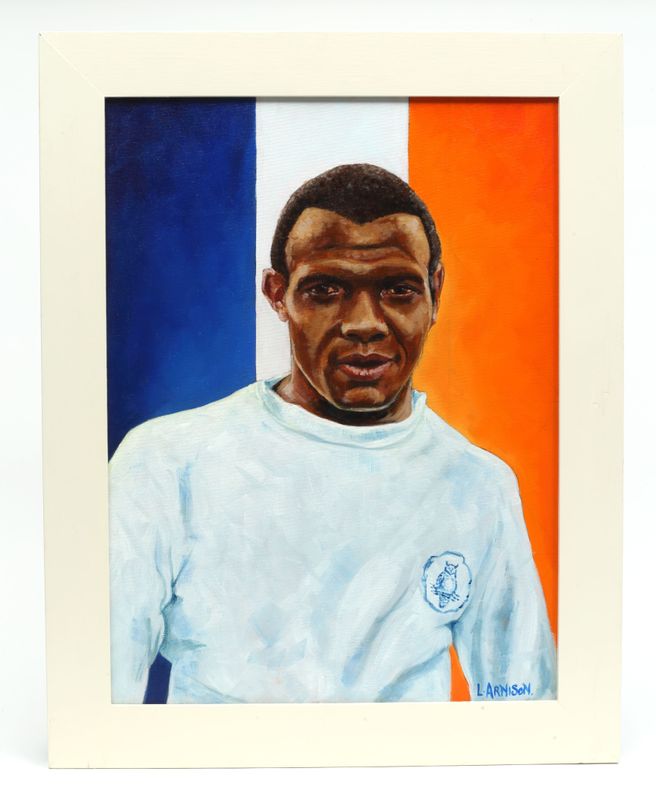
Albert Johanneson
Writer intro
My name is Hugo Campbell. I’m a member of the Preservative Party which is a group of young history enthusiasts that creates and run museum exhibits at Leeds. I have always been interested in history from a young age and I’m also a keen football fan.
By combining my two passions, I have discovered stories that both fascinating and enlightening. These blogs are not just about the achievements of Leeds’ many sporting icons but also their impact beyond the pitch. From tacking prejudice to raising charity funds, these people have left their mark.
Blog
Albert Johanneson is a footballing trailblazer, he was the First Black footballer to play in a FA cup final in 1965 when he played for Leeds United FC. He helped inspire future Black footballers who faced barriers and racism, like Laurie Cummingham for West Bromwich Albion in the 1970s and John Barnes who played for Watford and Liverpool during the 1980s and 1990s. During his time at Leeds United, Albert was an outstanding player — a quick and skilful winger. He was adored by many of the Elland Road crowd, who nicknamed him "The Black Flash."
He was born in 1940 in South Africa, he grew up during the early period of the apartheid era, a system of enforced racial segregation that classified every South African by race from birth and used that classification to determine where you could live, where you could go to school, what jobs you could hold, which toilets you could use, which sports you could play. He faced racism throughout his life, both before and after he arrived in England. British society in the 1960s was, in some respects, less openly oppressive than the apartheid system he had grown up under — but it brought its own forms of prejudice, and Johanneson encountered horrific racist abuse from crowds and opponents throughout his career in English football.
The Abuse towards black players during this period included monkey chants, Zulu chants and Bananas thrown from the terraces. Opposing defenders who — following the example of players like Nobby Stiles — were told to take him out physically early in the game, in the racist belief that Black players lacked toughness and would not come back for more.
Don Revie signed Albert in 1961 after he was recommended by a school teacher in South Africa. He helped Leeds win promotion in 1964 with Albert being Leeds’ top scorer. The following year, Leeds United reached their first ever FA cup Final. Despite losing 2-1 to Liverpool, Johanneson made history by being the first black footballer to play in an FA cup Final. Afterwards, he gave his FA Cup final shirt to the schoolteacher who had recommended him to Leeds — Barney Gaffney, the man in South Africa whose letter had changed his life. It was an act of profound gratitude (By The Newsroom, 2015).
However, following this remarkable achievement Albert's career began to narrow as a series of injuries kept him off the pitch, his place in the team being taken by future Leeds icon Eddie Gray. But Albert did pick up a winner medal when Leeds United won their first ever league title in 1969. The next season would be Albert’s last with Leeds and he would go on to spend two years at lower-league side York City where he scored three goals in 26 appearances, before retiring from football.
Following his Retirement, Johanneson struggled to find his footing away from football, and turned to alcohol as a way of coping. His marriage and family life suffered, and the football world of the time had little structure to support him. His alcohol dependency continued for the rest of his life and was a contributing factor in his death in 1995, at the age of 55. Over his nine years at Leeds, he made over 200 appearances and scored 67 goals.
Even amid these hardships, there were moments of real human kindness. In the early 1990s, Manchester United legend George Best spotted Albert in Leeds city centre and recognised him. Best, who held great respect for Johanneson, took him for a meal — a small but telling act of generosity from one footballing great to another, at a time when Albert had few people looking out for him ((Parlan, 2017).
Brian Deane, the ex-Leeds and Sheffield United forward was fulsome in his praise of Johanneson and his influence: “As young, football-crazy lads growing up in Chapeltown, Leeds, in the early 70s, Albert Johanneson was a name we were all familiar with. He had been an inspiration for the next generation of footballing talent in the city.” (Parlan, 2017).
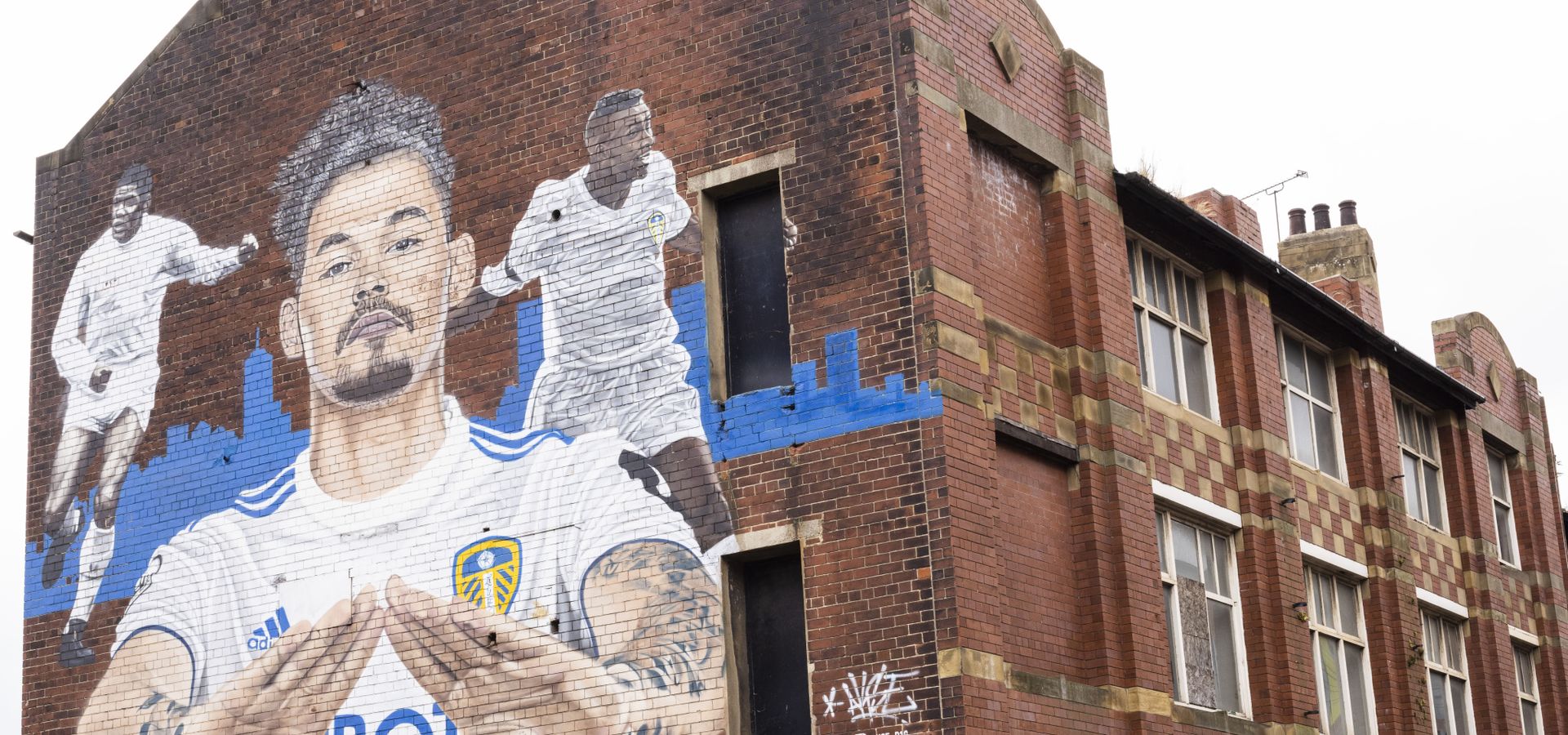
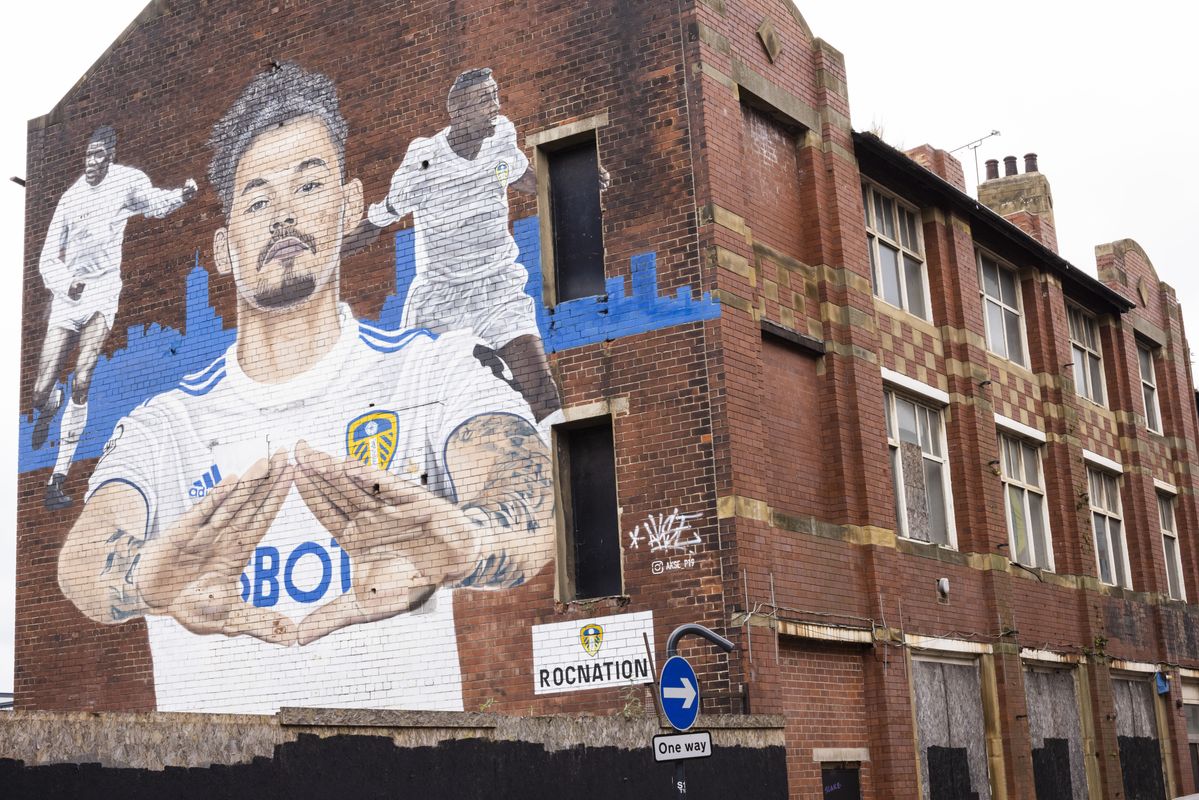
Albert Johanneson's legacy is now permanently marked in Leeds. A blue plaque was unveiled on the East Stand at Elland Road in his honour — the first Leeds Civic Trust plaque ever dedicated to a footballer — and he is depicted in a mural on The Calls in Leeds, alongside fellow Leeds United greats Kalvin Phillips and Lucas Radebe. Leeds United's chief executive Angus Kinnear described him as a trailblazer who "paved the way for other Black players to make their mark," (BBC News, 2019) while Leeds City Council leader Judith Blake said his impact and inspiration "should never be forgotten or underestimated."
Johanneson's courage in stepping onto the pitch, week after week, in the face of abuse that few footballers today could imagine, helped change what was possible for the Black players who followed him. It is no exaggeration to say that the diversity of English football today — something now taken entirely for granted — owes a debt to pioneers like Albert Johanneson, who broke through when no one else had.
By Hugo, Preservative Party member